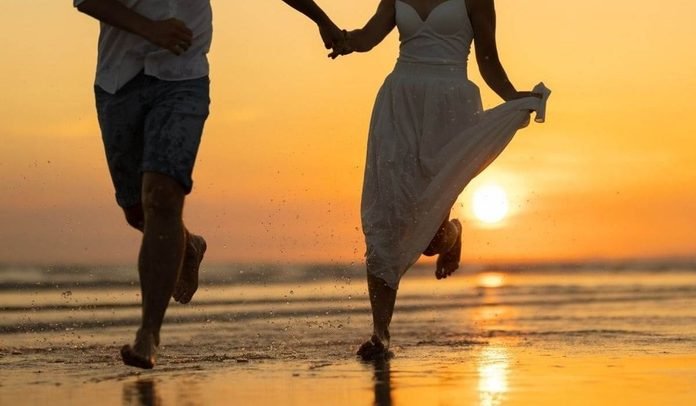
A beach proposal can be simple, private, and naturally beautiful. It can also be loud, windy, sandy, crowded, bright, and risky for a small valuable ring. The strongest plan does not depend on candles staying lit, petals staying still, or a speech being heard over the surf.
Choose stable details, stand well away from the water, and identify a sheltered backup.
Check tides, access, parking, beach rules, sunset, and local wind patterns before the day.
If the wind becomes uncomfortable or unsafe, move without treating the backup as a failed version.
Marriage should already be a shared plan. Once that is clear, use one of these 17 ideas to create a beach proposal that works in real coastal conditions.
1. Propose on a Dune-Boardwalk Overlook
Choose an established overlook with railings and legal access. The raised view provides ocean scenery without putting the ring near the surf. Stay on the boardwalk to protect dunes.
If wind is loud, step into a sheltered viewing area or use the nearby restaurant backup.
2. Plan a Sunrise Beach Walk
Sunrise often brings fewer crowds and sometimes calmer conditions.
Confirm early access and choose a partner who actually enjoys mornings. Bring coffee and light layers.
Propose on firm dry sand, away from waves. Backup: watch sunrise from a hotel balcony or beach-facing window.
3. Use a Beachfront Balcony
Reserve a room or rental with a protected balcony so the ocean remains visible without requiring a full setup on sand. Move inside if gusts become strong. Ask early in the stay, after unpacking and resting, so the rest of the trip becomes a private celebration.
4. Propose Beside a Seawall or Sheltered Cove
Visit at the same tide and time to confirm safe access.
A seawall, cove, or bluff-side path may reduce direct wind, but never enter areas exposed to waves or falling rocks.
Keep a second inland spot in case conditions change.
5. Pack a Windproof Picnic for a Beach Park
Use a legal picnic table or sheltered pavilion near the beach rather than a low blanket in blowing sand. Pack lidded containers, clips, and food that does not require delicate serving.
Propose after eating, then walk to the water for portraits if comfortable.
6. Create a Simple Driftwood-Free Setup
Use two chairs and one weighted lantern only where furniture is allowed.
Do not remove driftwood, disturb habitat, or build structures from natural material. Skip arches and loose fabric.
The horizon provides the backdrop; the setup only needs to offer a stable place to sit.
7. Ask From a Beach House Porch
A covered porch offers the sound and view of the ocean with protection from wind and spray. Prepare drinks, lights, and a meal inside. Propose on the porch if comfortable, then move indoors immediately afterward. Confirm rental rules before adding décor or guests.
8. Plan a Lighthouse View From Safe Ground
Choose a legal viewpoint near a lighthouse, not an exposed cliff edge.
Check seasonal hours, photography, and wind advisories. Ask where you can speak normally. Backup: a lighthouse museum, inn, or café with coastal views.
9. Propose After a Beachfront Dinner
Reserve a quiet indoor table, then take a short walk only if conditions are pleasant. If wind is strong, propose privately at the table or in a reserved room. Ask staff not to announce or hide the ring in dessert. The dinner makes the plan complete either way.
10. Use a Letter Instead of a Long Outdoor Speech
Write the full message before the day, read only the key lines outside, and ask clearly. Keep the letter in a protective folder or read it indoors first.
Wind can carry paper and words; preparation makes the message flexible without replacing your voice.
11. Plan a Beach Photography Session With an Inland Finish
Take a few couple portraits near the shore, then walk to a sheltered path or garden where you propose.
This keeps beach imagery without handling the ring beside water. Choose this only if your partner would enjoy a planned photo session.
12. Propose in a Beach Pavilion
Reserve a permitted pavilion with a roof, stable floor, and ocean view.
Use weighted table details and enclosed lights. Confirm whether alcohol, decorations, music, and professional photography are allowed. The roof helps with sun and light rain as well as wind.
13. Choose a Harbor Instead of Open Shore
A protected harbor walkway can offer boats, water, and coastal character with less wind than an exposed beach. Find a quiet legal spot away from working docks and traffic. Keep the ring away from grates and water. Backup: a harbor restaurant.
14. Plan a Barefoot Walk Only if the Sand Is Safe
Check sand temperature, shells, debris, and your partner’s comfort.
Carry shoes rather than requiring bare feet for the look. Propose on dry compact sand. If wind is blowing sand painfully, put shoes on and move to a protected location.
15. Ask During a Coastal Road Trip Stop
Choose a safe pull-off, beach park, or overlook with legal parking.
Check road and viewpoint closures. Propose only after both of you are away from traffic. Backup: continue to a reserved inn or restaurant rather than waiting in the car for wind to stop.
16. Create a Beach-at-Home Dinner
If coastal weather is poor, bring the feeling indoors with seafood or favorite vacation food, a playlist, photographs, and a view if available.
Do not cover the room in sand or shells.
Explain why the coast matters, then ask in warmth and privacy.
17. Let the Wind Become Part of the Story
If conditions are safe but breezy, abandon loose décor, stand close, laugh, and speak simply.
A natural windblown photograph may feel more alive than a controlled set.
The plan works because nothing essential depends on still air.
What Wind Changes at a Beach Proposal
| Wind-Affected Detail | Better Choice |
|---|---|
| Open candles | Battery candles or weighted enclosed lanterns where permitted |
| Loose petals, confetti, or paper | One bouquet, secured letter, and a leave-no-trace plan |
| Fabric arch | No arch, or a professionally secured approved structure |
| Long spoken message | Stand close, use a few clear points, and save the letter for shelter |
| Low picnic blanket | Sheltered table, pavilion, porch, or lidded picnic containers |
| Drone or complex camera equipment | Hand-carried camera and photographer experienced with coastal conditions |
Keep the Ring Farther From the Ocean Than You Think
Do not propose at the waterline, on a narrow dock, in a boat underway, or while wading. Waves travel farther than expected and wind affects balance. Choose dry stable ground with room to step back.
Keep the ring in its box inside a zipped pocket.
Do not bury it in sand, place it in a shell, attach it to a dog, or hide it in a picnic. Open the box toward your partner with both of you stable.
If the ring does not slide on easily because fingers are cold or swollen, return it to the box.
Resizing can happen later. Never force it near sand and water.
Check Tides, Weather, and Access
Tide changes can remove a cove, cut off a route, or move waves closer to a setup. Check local tide information and observe the location beforehand. Do not use tide pools, sea caves, sandbars, or narrow beaches without understanding escape routes and official warnings.
Review wind, storms, heat, lightning, high surf, air quality, and road access. A clear sky does not mean calm or safe conditions. Make the final call early enough to alert the photographer and move any reservation.
Confirm beach hours, parking, permits, professional photography, furniture, alcohol, fires, animals, and cleanup. Public access does not mean every setup is allowed.
Choose Clothes for Wind, Sand, and Temperature
Tell your partner the date includes beach walking. Suggest secure layers and shoes they can comfortably remove or keep on.
Avoid controlling their outfit for photos. Bring a brush, hair ties, clips, tissues, and a warm layer if these are items your partner normally uses.
Flowing clothing can look beautiful but may become difficult in strong wind.
Comfort and control matter more. A photographer can position you so the wind moves hair and fabric away from faces rather than across them.
A Real Beach Backup Plan
| Primary Plan | Weather-Proof Backup | What Stays the Same |
|---|---|---|
| Sunset on open sand | Beachfront hotel room or restaurant window | Ocean view, timing, flowers, music, and words |
| Picnic near the water | Reserved pavilion or beach-house porch | Food, drink, blanket, and private celebration |
| Coastal walk | Harbor museum, aquarium, or protected promenade | Coastal connection and shared outing |
| Lighthouse viewpoint | Inn, visitor center, or café with the lighthouse visible | The landmark and reason it matters |
How to Get Beach Photos When the Wind Is Strong
Work with the wind instead of facing directly into it. A photographer can position you with wind coming from the side or slightly behind so hair moves away from faces. Stand close and keep the proposal message short enough to hear.
Take the actual proposal photographs from a respectful distance, then move to a sheltered area for portraits. Use dunes only from established paths. A boardwalk, seawall, beach grass viewed legally, pier architecture, or hotel window can add variety.
Do not reenact the question if a gust blocks one image.
Photograph the real laughter and relief afterward. Those moments often tell the coastal story better.
A Six-Week Beach Proposal Timeline
| Time Before | Planning Work | Coastal Check |
|---|---|---|
| 6 weeks | Confirm ring, budget, date range, privacy preference, and photographer | Compare beach areas by access, shelter, crowds, and nearby indoor options |
| 5 weeks | Reserve lodging, pavilion, dinner, or private property and secure permissions | Ask about tides, seasonal closures, professional photography, furniture, fires, and animals |
| 3 to 4 weeks | Visit at the same time, map the route, and choose exact primary and backup spots | Observe wind exposure, wave reach, noise, sunset light, restrooms, and parking |
| 2 weeks | Write your words, choose stable details, and assign helper roles | Remove anything loose, fragile, illegal, or difficult to carry |
| 1 week | Inspect the ring and confirm reservations, vendors, and celebration | Review tides, surf, wind, weather, road access, and current beach notices |
| 1 to 2 days | Make the location call and send the final timeline | Move early for unsafe or clearly uncomfortable conditions |
Beach Rules and Leave-No-Trace Planning
Contact the city, park, resort, or property manager responsible for the exact beach. Ask about hours, permits, professional photography, group size, reserved areas, chairs, arches, signs, alcohol, glass, open flames, animals, drones, amplified music, and cleanup. Rules can differ between neighboring beaches.
Do not scatter petals, confetti, rice, glitter, balloons, or paper, even when labeled biodegradable. Wind and water move them into habitat. Do not collect shells, coral, plants, or driftwood where removal is prohibited. Keep every item secured and take everything out.
Stay off dunes except on designated paths and boardwalks. Dune vegetation protects the coast and can be easily damaged. Do not place a photographer or helper in a restricted area for a better angle.
If the proposal needs exclusive space, furniture, or a large installation, rent a permitted property or pavilion.
Trying to claim a public section with decorations can create conflict and still provide no privacy.
Three Complete Wind-Ready Beach Plans
The Beach-House Porch Plan
Reserve a beach house with a covered porch and an indoor dining area. On the first full evening, prepare favorite food, a small secured bouquet, and a playlist. Check the porch wind before bringing your partner outside.
If conditions are comfortable, sit together, speak, and propose with the ocean visible. If wind or rain is strong, ask beside the interior windows without changing the food, music, flowers, or words.
Take outdoor portraits the next morning if weather improves.
The Sunrise Boardwalk Plan
Visit the boardwalk at sunrise a week or two ahead.
Choose an overlook with railings, safe footing, and some protection from direct wind. Tell your partner the outing involves an early coastal walk so they can dress appropriately.
Bring coffee and propose at the overlook. If wind is too loud, continue to a sheltered gazebo or return to a reserved breakfast table with a view.
The proposal remains a sunrise date rather than a struggle on the sand.
The Harbor-Dinner Plan
Reserve a quiet indoor table at a harbor restaurant and arrive early for a walk. If the promenade is calm, propose at a safe wide viewpoint. If conditions are windy, ask in a private restaurant corner before the meal.
Ask staff not to announce anything and arrange the check discreetly. This plan gives the coast a role while ensuring warmth, food, restrooms, and a reliable place for the first engaged hour.
Traveling With the Ring to the Coast
Keep valuable jewelry with you rather than in checked luggage. Use the ring box inside a zipped inner compartment of your personal item. Do not move it between bags, rental cars, beach totes, and hotel drawers more than necessary.
A bulky presentation box can create a visible shape.
Ask the jeweler for a slim protective box, but never carry a loose ring. Store purchase and insurance information separately.
Know how to contact the jeweler if the ring needs resizing after the proposal.
At the beach, carry the ring on your body rather than in a towel bag that may be left unattended or filled with sand.
Do not ask a photographer, driver, hotel employee, or child to hold it unless absolutely necessary and specifically agreed.
How to Hear and Be Heard
Stand close with the wind coming from the side or behind you, not directly into your faces. Choose a spot where a wall, dune-boardwalk structure, pavilion, or building reduces sound. Turn away from the breaking waves if needed.
Keep the message to four parts: why you chose the place, what you love about your partner, what future you want, and the clear question. Save a longer letter for the room or dinner afterward. You do not need to shout a private commitment.
If your partner cannot hear, laugh, move closer, and repeat yourself.
Do not keep talking for a camera. A real repeated question is still the real proposal.
What to Say in a Beach Proposal
For a couple who loves travel: “We have seen so many beautiful places together, but my favorite part is always the life we return to. You are my adventure and my sense of home. I want to keep exploring and building that life with you. Will you marry me?”
For a familiar beach: “We have come here in different seasons and different versions of ourselves. Through all of them, you are the person I want beside me. I want to keep choosing our future, wherever the tide takes us. Will you marry me?”
Keep ocean metaphors limited. A proposal feels personal when it names your partner’s character, a shared memory, or a future you have actually discussed.
A Wind-Ready Proposal-Day Kit
- Ring in a protective box and zipped inner pocket
- Warm or sun-protective layers suited to the actual forecast
- Secure shoes, water, and a towel or dry seat cover
- Hair ties or clips your partner already likes to use
- Weighted or enclosed lighting only if permitted
- Lidded food containers and clips for a legal picnic
- Access, parking, tide, reservation, and backup information
- Phone and charger for essential contact, then placed away
When to Move Instead of “Making It Work”
Move for high surf, lightning, dangerous wind, blowing sand that hurts, heat or cold that distracts, closed access, poor air quality, unsafe tides, or any official warning. Also move if your partner is visibly uncomfortable. The proposal is not a test of coastal toughness.
Do not move merely because hair is windblown or clouds cover sunset.
Separate appearance from safety. The photographer can work with normal coastal movement; no one should work around a dangerous sea.
Plan the First Sand-Free Hour Afterward
Have a room, restaurant, porch, or car nearby where you can sit, wash hands, drink water, and protect the ring. Bring a small towel and simple shoe brush. Salt spray and sand should not follow the ring into an open bag.
Give yourselves private time before a long photo session or family celebration.
If loved ones are waiting, tell your partner and offer a choice. A comfortable meal and a quiet view may be the best continuation.
A Final Beach Check
- The exact beach rules, access, tide, and closing time are confirmed.
- The setup contains nothing loose, harmful, or dependent on still air.
- The ring stays on dry stable ground and away from water.
- My partner knows enough to dress for sand, wind, and temperature.
- The backup preserves the ocean connection and is ready to use.
- The photographer and helpers know the move time and second location.
- We can hear each other without shouting.
- There is a sheltered place for private time afterward.
Spend on Stability, Not More Stuff
If the budget is limited, prioritize legal access, safe transportation, a reliable sheltered backup, food, and a photographer only if images matter deeply to your partner. The beach already supplies a large visual setting. An arch, rows of candles, and loose flowers often add more wind risk than meaning.
A small bouquet, reserved pavilion, beachfront room, or quiet dinner can provide better value because each continues working when conditions change. Read weather and cancellation terms before paying deposits. Portable details should move between locations without a crew.
Do not choose an unsafe free location to avoid a modest permit or reservation fee. Privacy, shelter, and legal access are practical parts of the experience, not unromantic expenses.
Final Thoughts
A beach proposal works in wind when the important parts are stable: safe ground, secure ring, clear words, comfortable partner, and a prepared sheltered option.
Let the ocean provide scale and movement.
Do not ask the weather to behave like a studio.
If the wind changes the plan, moving with thoughtful care for each other can always become part of the memory rather than the reason it failed.