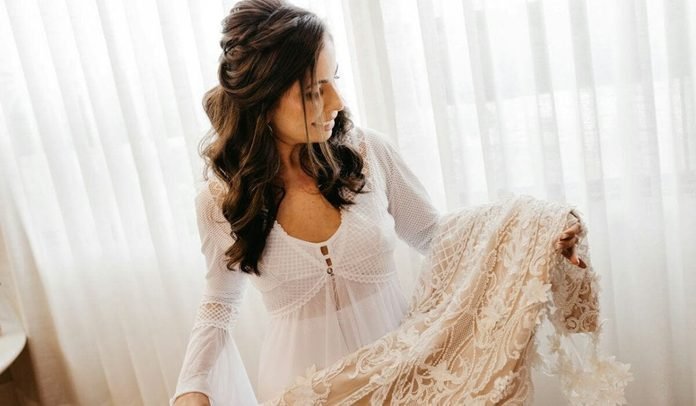
The wedding ends quickly. The things used to create it do not. By the next morning, a damp hem is inside a garment bag, the bouquet is beginning to soften, and boxes of candle holders are travelling to somebody’s dining room with no plan beyond “we’ll sort it later.”
Your dress, flowers, and décor need different decisions. A gown may be valuable because of its fabric, resale potential, or family meaning. Fresh flowers have a narrow window for preservation.
Most décor is useful only if it has a clear next home. Treating all three as sentimental keepsakes creates clutter; treating all three as leftovers can lead to regret.
This guide starts with what to do immediately, then walks through keeping, preserving, selling, donating, repurposing, and letting go.
You do not need to save everything to prove the wedding mattered.
The post-wedding decision table
| Item | Do first | Long-term choices | Common mistake |
|---|---|---|---|
| Wedding dress | Remove damp items, note stains or damage, and arrange the right cleaning | Preserve, rewear, alter, sell, donate, or repurpose selected fabric | Leaving it in a plastic garment bag for months |
| Fresh flowers | Identify the bouquet and contact any booked preservation artist immediately | Professional preservation, pressing, drying, sharing, composting, or photographing | Waiting a week to decide |
| Décor | Separate rentals, borrowed pieces, sentimental items, and couple-owned stock | Use at home, sell, donate, lend, give away, recycle, or keep a small archive | Paying to store items with no planned use |
Before deciding, find out what you actually own
The flowers on the tables may belong to you while the vases belong to the florist. The taper candles may be yours, but their holders may be rentals. An arch built by a relative could be a gift, a loan, or something they expect to dismantle.
Start with contracts and the breakdown list before offering anything to guests.
Make four groups: returns to businesses, returns to people, personal keepsakes, and couple-owned items awaiting a decision. Photograph hired items together before they leave and note quantities. Returning 29 of 30 bud vases is easier to resolve when you know what the collection looked like at pickup.
If a planner, florist, venue, or family member took items home, ask for a brief inventory and collection deadline. “We have a few boxes” is not enough. You need to know whether those boxes contain personal vows, rented stands, opened candles, or 120 menus ready for recycling.
What to do with your wedding dress
Take care of the fabric before choosing its future
A dress can look clean in evening light while holding dust, grass, makeup, drink marks, body oils, or moisture.
Check the hem, train, underarms, neckline, closures, sleeves, and any area that touched fake tan or body makeup. Photograph visible stains, tears, missing buttons, loose beading, and damage to a bustle before sending the garment anywhere.
Remove tissues, fashion tape backing, pins, spare buttons, and personal items from pockets.
Separate a wet underskirt, detachable lining, or heavily marked overskirt if the design allows and the garment instructions support it.
Do not experiment with household stain treatments on an unfamiliar fabric; heat, rubbing, water, or the wrong product can set a mark or change colour.
The next step is usually a professional cleaner experienced with wedding clothing, especially for silk, lace, embellishment, vintage material, structured bodices, handwork, or cultural garments.
Ask how the item will be assessed, whether cleaning and repair are separate, who performs the work, and what happens if a trim cannot tolerate the standard process.
If you want to preserve the dress
Preservation makes sense when you want the original garment kept as a family object, not merely because it seems like the respectable bridal choice. Ask yourself where the finished box will live and who is likely to value it.
A preserved dress still requires suitable storage and occasional attention.
A proper service should explain cleaning, repairs, packing materials, box construction, inspection, and any guarantee in plain language. Long-term textile guidance generally favours clean, stable, archival-quality materials, protection from light, and a cool, dry interior location without large swings in temperature or humidity. Attics, basements, sheds, and a permanently sunny wardrobe are poor homes for sentimental fabric.
If you are storing the dress yourself, avoid leaving its full weight on narrow hanger straps for years. Use materials intended for textile storage and support folds so sharp creases do not bear all the pressure.
Ordinary coloured tissue, unverified cardboard, and sealed plastic are not automatic substitutes for archival supplies.
Preservation does not freeze a garment in time. Fabric, adhesives, dyes, and trims can age differently. Follow the provider’s advice about inspection and repacking, and keep the service record with the box so a future owner knows what was done.
If you hope to rewear or alter it
A wedding dress does not need to remain a wedding dress. A skilled alterations professional may shorten it, remove a train, separate a two-piece design, change sleeves, simplify embellishment, dye a suitable fabric, or turn a full skirt into a dress that works for an anniversary or formal event.
Have the garment cleaned first unless the professional asks to examine it untouched. Then discuss what the construction allows.
A heavily boned bodice, lace placed around the hem, or fabric that takes dye unevenly may make the imagined conversion expensive or risky. Ask for a sketch, estimate, and explanation of what will be permanently removed.
Rewearing can also mean keeping the dress mostly intact. Some couples use it for an anniversary portrait, vow renewal, or private dinner before deciding its longer future. That works best when the dress is cared for now rather than left dirty because another use is only a possibility.
If you want to sell it
Resale is easiest while the design is current, the size and alteration details are clear, and purchase records are still available.
Cleaning may improve the sale, but compare the cost with realistic resale value. A specialist platform or bridal consignment shop can explain what it accepts, how pricing works, what commission applies, and who handles shipping or appointments.
List the designer, labelled size, street-size fit if helpful, measurements after alterations, colour, fabric, original purchase price, wedding date, cleaning status, and every alteration. State whether seams have fabric that could be released.
Include close photographs of the front, back, train, bodice, closures, label, hem, and any flaw. A buyer can accept wear; she cannot make a good decision if wear is hidden.
Remove detachable items you plan to keep before photographing.
If a veil, overskirt, cape, belt, or sleeves are included, say so. Keep payment and delivery inside a method with appropriate protections, and do not send a high-value garment after an informal promise from a stranger.
If you want to donate it
Donation can give the garment another wedding, support a charity shop, supply a theatre or education programme, or serve another purpose accepted by a local organisation. Acceptance rules vary. Some groups take only recent styles and particular sizes; others cannot accept dresses with marks, missing pieces, or extensive custom alterations.
Ask before paying for cleaning or shipping. The organisation may have a preferred condition, season, appointment process, or no current storage capacity.
Confirm whether it provides a receipt where relevant, but use the appropriate local tax guidance for any claim rather than estimating a value from the original price.
Donation should still be respectful. Fasten the dress, include detachable parts and care information, and disclose damage. An organisation receiving gowns is not a free disposal service for an item that cannot reasonably be used.
Keep a photograph and the donation record if you want a trace of where the garment went. You do not need to follow its next story for the choice to remain meaningful.
If you want to repurpose only part of it
Fabric or trim can become a small keepsake without turning the entire gown into a box of crafts.
Lace from an alteration offcut might edge a handkerchief, wrap a bouquet for a future family wedding, sit inside a framed textile piece, or become part of a small accessory. Linings and plainer fabric may be more practical than a heavily embellished bodice.
Do not cut the dress during the emotional week after the wedding. Clean it, photograph it, and wait until you are certain resale, donation, or preservation no longer matters. Ask the person doing the work to use the smallest useful area and return unused material.
If the dress has family or cultural significance, discuss irreversible changes with the people who may reasonably expect to inherit or use it. The final decision belongs to the owner, but a conversation can prevent a surprise that cannot be undone.
What to do with your wedding flowers
Decide which flowers matter before everything is unloaded
Couples often say they want to preserve “the bouquet” without telling the cleanup team which one. There may be a bridal bouquet, a tossing bouquet, attendants’ flowers, ceremony arrangements, and reception flowers moved between locations. Label the arrangement intended for preservation and name the person responsible for it.
If you booked a preservation artist, follow that business’s timing, packing, cooling, and delivery directions. Do not improvise based on a general article when a specific method is waiting to receive the flowers. The artist may want the bouquet intact, partially wrapped, or prepared in a particular way.
Take clear photographs from several angles while the arrangement is fresh. They preserve the florist’s original shape and colour and give a preservation artist a reference if the bouquet must be dismantled.
Remove any heirloom charm, photo, locket, ribbon, or borrowed pin before the flowers leave your hands.
A preservation studio cannot identify a family object it was never told to expect.
Choose a preservation result, not only a technique
Start with where the finished piece will live. Pressed flowers suit a flat frame or handmade paper piece. Dried flowers can remain dimensional but usually look more muted and feel fragile. Silica drying may retain more shape in suitable flowers. Professional freeze-drying or other specialist methods can produce a dimensional display at a higher cost. Resin artists may use fully prepared flowers in blocks, jewellery, trays, or other pieces.
Every method changes the flowers. White petals may become cream, bright colour may soften, and thick blooms may behave differently from delicate ones. Ask a professional to show finished work featuring flowers similar to yours—not only the most preservation-friendly bouquet in the portfolio.
Also ask what portion of the bouquet is used, whether the frame or display is included, how colours are corrected if at all, how long the process takes, and what happens if certain flowers cannot be saved. The most useful choice is the object you will display, not the technique with the most impressive name.
DIY options that do not require saving the whole bouquet
Air-drying is simple: select healthy stems, remove damaged foliage, and hang small groups in a dry, dark, ventilated place. Large, tightly tied bouquets can hold moisture, so drying selected stems is often more manageable than hanging the entire arrangement. The result will be delicate and more muted than the wedding-day flowers.
Pressing works well for flatter blooms, petals, and foliage. Place clean, dry material between suitable absorbent sheets under even pressure, changing material if needed. A purpose-made press is easier to monitor than risking moisture or plant stains inside a treasured book.
Silica products can preserve more dimension, but flowers need to be handled carefully and the product instructions followed. Resin is a separate craft with its own preparation and safety requirements; fresh or incompletely dried plant material should not simply be dropped into a mould. If you want a polished keepsake without learning the process, hire a maker whose work you have inspected.
Practise on a table flower or spare stem first. Keep the best part of the bouquet untouched until you know how your chosen flower responds.
Share, donate, or compost what you will not preserve
Centrepiece flowers can go home with guests only after rental vessels and floral mechanics are removed according to the florist’s plan. Provide simple wrapping or spare containers, and ask rather than assigning a large arrangement to somebody staying in a hotel.
Donation to care homes, community spaces, or other organisations needs arranging in advance. They may have delivery windows, allergy or hygiene rules, limited vase capacity, or no ability to accept flowers.
A volunteer service may be available in some cities, but it still needs a confirmed pickup and permission from the florist and venue.
Composting is a sensible ending for suitable plant material once wire, tape, foam, ribbon, pins, plastic tubes, and treated decorative pieces are removed.
Check local composting rules; not every municipal collection accepts floral waste or every component used in an arrangement.
What to do with your wedding décor
Keep only what already has a place or a purpose
“We could use this someday” is how 80 candle holders become a long-term storage problem. A better test is specific: Where will this live? When will we use it? Would we buy it for our home if it did not come from the wedding?
Keep one or two pieces that can join everyday life—a card box used for letters, table numbers turned into anniversary markers, a welcome sign reframed as art, or candlesticks that suit the dining table.
Sentimental value becomes easier to enjoy when the object is visible rather than buried with extension cords and spare place cards.
For purely commemorative pieces, choose a container before choosing the contents.
One archive box can hold a clean invitation, menu, ribbon, place card, ceremony programme, small sign, and a few notes. The box provides a natural limit.
Sell décor while it is clean, complete, and in season
Sort sellable décor into useful sets and count it accurately. “Thirty-two clear bud vases, three heights” is easier to price than “boxes of glass.” Clean off wax and adhesive using a method suitable for the material, replace pieces in their original packaging where possible, and photograph the full set in daylight.
List dimensions, quantities, colour, material, condition, collection area, and whether transport requires a large vehicle. Show a close view and a photograph from the wedding if you have permission to use it. Do not imply that a buyer receives flowers, candles, stands, or styling pieces that are not part of the sale.
Price according to condition, demand, and the convenience of the bundle—not the hours you spent sourcing it.
Set a deadline. If the set does not sell, lower the price, split it into practical lots, or move to donation. Storage costs space and attention even when it does not generate a monthly bill.
Donate with the recipient’s needs in mind
Schools, theatres, community groups, houses of worship, charity shops, and small event organisations may use neutral linens, frames, containers, easels, faux flowers, or battery candles. They may not need personalised signs, partly burned candles, broken glass, or enormous structures with no assembly instructions.
Send an itemised photograph and ask what the organisation can accept before arriving with a vehicle full of décor. Include hardware, remote controls, spare parts, and a note explaining how unusual pieces assemble. Clean items and package sharp or fragile materials safely.
Donation is not the only generous option. A friend planning a shower or community dinner may use a small set.
Give it without attaching an obligation to copy the wedding or return every item in perfect condition unless the arrangement is explicitly a loan.
Keep an itemised donation record if the receiving organisation provides one. Questions about valuation or tax treatment depend on local rules and should not be guessed from retail wedding prices.
Reuse décor without making your home look like the reception
Neutral frames can hold family photographs, linen napkins can serve future dinners, a ceremony rug can move into a room, and sturdy baskets can become household storage. Remove wedding-specific labels and use only the amount the home needs.
Seasonal use is another option. Candles, ribbon, metallic accents, and faux greenery may suit holidays or future parties, but create a labelled container and a maximum quantity. Saving six centrepiece bowls is a plan; saving sixty because they stack neatly is inventory.
Repurposing should cost less effort than replacing the object. If repainting a sign requires materials, tools, several weekends, and storage until then, giving it to somebody who likes it now may be the better use.
Be cautious with candles and electrical pieces. Confirm that partly burned candles fit the intended holders and inspect battery compartments, damaged cords, plugs, and bulbs before placing items into household use.
Décor used once is not automatically ready for years of casual storage.
Handle personalised and difficult-to-recycle pieces honestly
Acrylic signs, vinyl lettering, floral foam, mixed-material favours, treated confetti, mirrors, batteries, and coated papers may not belong in ordinary household recycling. Separate components where practical and use current local guidance. A recycling symbol on one part does not make the assembled item recyclable at the kerb.
Personalised pieces can sometimes be altered. Vinyl may lift from suitable surfaces, paper inserts can leave frames, and a dated sign may be cut down or painted if the base is worth keeping. Test a hidden area before using solvents, heat, or scraping on acrylic, mirror, wood, or finished metal.
If an item has no second use and cannot be recycled locally, dispose of it rather than paying to store guilt.
The sustainable decision happens mostly during purchasing and design; after the wedding, honest disposal can be better than moving the same waste through several homes.
A realistic timeline for sorting everything
| When | Dress | Flowers | Décor |
|---|---|---|---|
| Wedding night | Place with a named owner; separate damp pieces | Protect the chosen bouquet and follow booked instructions | Separate returns, loans, keepsakes, and owned goods |
| First 48 hours | Document condition and contact the appropriate cleaner | Deliver for preservation or begin the chosen DIY method | Complete rental and borrowed-item returns |
| First two weeks | Choose preservation, rewear, resale, or donation path | Monitor DIY pieces and remove unwanted mechanics | Keep, sell, donate, reuse, and disposal sort |
| By one month | Send to its next destination or set a firm decision date | Store finished pieces away from harsh light and moisture | List, deliver, or dispose; stop keeping an undecided category |
Keep the memory, not every material
Before selling or giving something away, photograph it well. Take one image of the dress after cleaning, the bouquet while fresh, and the finished reception room before it was cleared. Those photographs often hold the memory better than a garment you never open or a garage shelf of vases.
Choose a small number of objects with a believable future. Care properly for the dress if it matters. Preserve flowers in a form you want to display. Let useful décor become useful again.
The measure is not how much of the wedding you keep; it is whether what remains still belongs in your life.