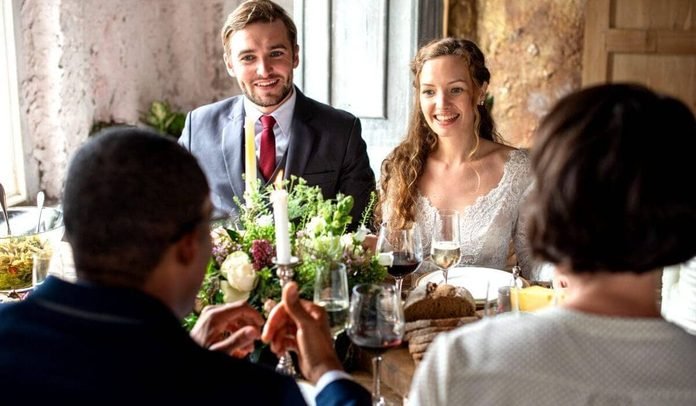
A small wedding can be arranged beautifully in six months because fewer guests open up venues, meal formats, and personal details that become difficult at a larger scale.
It is not automatically simple, though. Thirty people still need somewhere to sit, something to eat, clear information, and a ceremony that can legally or meaningfully happen.
The best small celebrations use their size on purpose. Guests aren’t scattered through an oversized room.
The couple has time to speak with everyone. Money goes toward the parts people feel rather than traditions included by habit.
These seventeen steps protect that intimacy while covering the practical work.
1. Decide what “small” means before calling venues
There is no universal cut-off. For one family, a small wedding is twelve people at dinner; for another, it is sixty guests rather than two hundred.
Write the actual names. A number chosen without a list tends to grow as soon as parents and partners begin suggesting people.
Create two columns: people you cannot imagine marrying without, and people you would gladly include if space and budget allow. The first column is the wedding you are protecting. Don’t book a room that forces you to fill the second.
A small list can expose assumptions quickly. One parent may believe every aunt and uncle is essential; the couple may be picturing only immediate family. Resolve the rule before discussing individual names.
It is much harder to remove a person after someone has informally promised an invitation.
2. Give yourselves a clear rule for invitations
Small guest lists feel personal, so inconsistent choices are noticed.
Agree on a boundary you can explain: immediate family and closest friends, no colleagues, or only people both partners know well. The rule does not need to please everybody, but it should be fair enough to use more than once.
Partners, children, and family units need deliberate decisions too. Traditional etiquette, family expectations, and practical limits vary. Name every invited person clearly and avoid language that leaves guests guessing if their partner or children are included.
If an uninvited person asks directly, answer without blaming the venue, budget, or another relative: “We’re keeping the wedding to immediate family and a few close friends.”
A short, consistent explanation is kinder than inventing a reason that may not hold up across the guest list.
3. Set a budget for the wedding you are actually having
A lower guest count can reduce catering, rentals, stationery, and transport, but many costs do not divide by the number of people. Photography, attire, music, officiant services, and venue hire may cost nearly the same for twenty guests as for eighty.
Choose a total ceiling, set aside a contingency amount, then price the celebration in full.
Include taxes, service charges, delivery, setup, alterations, overtime, gratuities where customary, and next-day returns.
Small weddings become unexpectedly expensive when the couple treats every per-person saving as permission to upgrade another category.
4. Choose the shape of the day
Before picking décor, decide what guests will do. Your celebration might be a ceremony and private dining-room lunch, vows followed by cocktails and cake, a garden ceremony with a chef-led dinner, or a full evening reception in a smaller room. The format determines the venue, staffing, music, furniture, and timeline.
A short event is not rude if the invitation communicates it.
A ceremony at two followed by cake and drinks until five can feel generous; guests simply need to know it is not a dinner reception.
5. Secure a venue that suits the group
At six months, search restaurants, private dining rooms, boutique hotels, small galleries, community spaces, gardens, inns, wineries, and traditional venues with intimate rooms. A place used to serving groups of your size may already provide furniture, tableware, staff, and an experienced kitchen.
Ask how the room feels at your minimum guest count. A ballroom that technically accommodates thirty can make the group look lost. Also confirm privacy: a restaurant booking may be a private room, a screened section, or a full buyout, and those are very different experiences.
Restaurants and hotels may price small events through a minimum spend rather than a room fee. That can work well if the amount becomes food and drink you value. It works poorly if thirty guests must consume a minimum designed for sixty.
Ask what happens if your final group is smaller than estimated and whether upgrades, additional courses, or better wine can count toward the minimum.
Check the whole venue cost
- Room fee or food-and-drink minimum
- Menu, bar, cake, staffing, taxes, and service charges
- Furniture, linen, tableware, candles, and printed menus
- Ceremony fee and room-turn costs
- Access time, music limits, parking, accessibility, and finish time
- Bad-weather alternative for any outdoor portion
6. Confirm the ceremony and legal route
Research the marriage requirements for the exact place where the ceremony will occur.
Notice periods, licence validity, documents, witnesses, officiant authority, residency, and registration procedures vary across countries and local jurisdictions. Learn the rules now, then apply within the correct window using official guidance.
Religious or cultural ceremonies may involve preparation, permissions, meetings, or required elements.
Speak with the relevant officiant or institution early. A small guest list does not shorten those processes.
7. Book only the professional team you need
Secure date-specific priorities after the venue: planner or coordinator, photographer, videographer, officiant, florist, musician or DJ, hair and makeup, transport, rentals, cake, or other services relevant to your plan.
One photographer may cover an intimate wedding comfortably; a complex private-property event may still need a full planning and production team.
Ask vendors if they offer shorter coverage, small-event collections, weekday options, or services scaled to one room. Do not assume “micro-wedding” means a discount for the same amount of work. Setup, travel, equipment, editing, and the professional’s date still have value.
Scale coverage thoughtfully. Four hours of photography may cover dressing, ceremony, portraits, and the start of dinner, but not speeches or evening atmosphere. Ask to see a sample timeline before choosing hours.
Saving on coverage is only useful if the moments you care about still happen while the photographer is present.
8. Tell guests as soon as the date is firm
Send save-the-dates promptly after signing the venue, especially if guests must arrange flights, time off, childcare, or accommodation. With a very small group, a personal call before the formal notice feels warm and gives essential people a chance to flag a serious conflict.
Don’t announce the wedding broadly before invited guests hear from you.
News travels quickly, and a social post can create avoidable hurt or awkward questions while the guest list is still private.
9. Choose attire with the six-month date stated first
Tell boutiques the wedding date before trying on gowns. Some made-to-order options may fit; others will not leave enough room for production and alterations.
Ready-to-wear, samples, secondhand pieces, vintage, rentals, separates, and non-bridal designers offer excellent alternatives with less delivery risk.
Book alterations early and include shoes, undergarments, accessories, tailoring, and pressing in the budget.
Dress for the setting as well as the photographs. Restaurant aisles, garden paths, stairs, temperature, and the length of the event all matter.
10. Design for closeness rather than scale
Choose three mood words and let the room lead. In a handsome private dining space, good linens, warm candles, and seasonal flowers may be enough.
In a garden, the view can be the ceremony focal point. Avoid shrinking grand wedding installations until they feel oddly placed; design for the proportions you have.
Small tables bring details close to guests, so quality and texture show. This doesn’t require more objects. One lovely menu, a low arrangement, flattering light, and glassware suited to the meal can feel more finished than layers of personalised pieces.
Use one long table carefully
A long table creates instant warmth, but check its width, serving style, centrepiece height, wheelchair access, and how guests reach their seats. Seat the couple where they can see the room rather than automatically in the middle with their backs to half the group.
Fewer tables do not always mean a tiny flower bill. One long table may require many small arrangements and candles to avoid empty stretches, while a single round table needs only one centre.
Ask the florist to design to the actual measurements and sight lines rather than pricing “flowers for thirty.”
11. Plan a meal that fits the conversation
A plated dinner supports toasts and an unhurried pace. Family-style food encourages sharing but needs table space. A restaurant tasting menu can feel special, although a long service may not suit young children or a group hoping to dance.
Choose the experience first, then the menu.
Collect dietary information through the caterer’s preferred method and pass it on accurately.
Questions involving allergies or food safety belong with the food professional. Confirm children’s meals, vendor meals, non-alcoholic choices, cake service, coffee, and the final-count deadline.
12. Make a seating plan even for a tiny guest list
“Everyone can sit anywhere” often leaves couples separated, older guests in difficult seats, and one late arrival at the awkward empty chair. Assigning seats lets you consider conversation, mobility, hearing, children, and family dynamics.
For a group under twenty, place cards may be enough. With several tables, create a clear plan. Do not use the seating chart to force a reunion or test whether two relatives have moved past a conflict.
13. Build enough energy into the reception
A small dance floor can be joyful, but dancing is not the only successful ending.
Live acoustic music, a carefully made playlist, conversation after dinner, lawn games, a tasting, or a change of location may suit the group better.
If dancing matters, place it close to the guests rather than in a separate empty room.
Ask the DJ or musicians how they adapt to small groups. Good sound should fill the space without making dinner conversation difficult.
14. Use personal details where guests will notice them
With fewer people, you can write a short note at each seat, serve a family recipe, display photographs without building a large installation, or ask the officiant to acknowledge the group’s role in your life. Personal does not need to mean handmade.
Keep boundaries. Sharing a table with every guest does not require sharing private vows, explaining family decisions, or giving everybody a role. Intimacy works best when it is offered, not performed.
15. Write a complete timeline
A small wedding still needs arrival, ceremony, photographs, drinks, food service, toasts, music, transport, and an end time. Work backward from the ceremony with guidance from hair and makeup, photography, and travel. Work forward with the venue, caterer, entertainment, and any room change.
Leave breathing room. At an intimate wedding, guests notice when the couple disappears for ninety minutes of photographs because there is no crowd to absorb the gap. Discuss a portrait plan that protects both good light and time with the people you invited.
16. Give the day to someone else
A planner or coordinator is valuable at any guest count. If professional coordination is outside the budget, appoint a capable point person who is not central to the ceremony. Give them vendor contacts, the timeline, payment instructions, and authority to solve minor problems.
Assign cards and gifts, rings, flowers, personal belongings, transport checks, leftover food, décor removal, and rental returns. With only close family present, it is easy to assume “someone” will notice. Named responsibility is kinder than an end-of-night scramble.
17. Prepare the last month for people, not projects
Collect replies, finish seating, submit final numbers, confirm dietary and accessibility information, complete fittings, pay balances, and circulate one current timeline. Check the weather plan, legal documents, arrival details, and next-day tasks.
Stop adding décor in the final two weeks. Use the time to speak with your officiant, write vows, confirm the guests’ practical questions, and rest. The advantage of a small wedding is the chance to be present with every person there. Protect enough energy to enjoy that.
How to pace the 17 points across six months
| Timing | Finish these outcomes |
|---|---|
| Month six | Guest rule, budget, day format, ceremony route, venue, and first guest notice |
| Month five | Professional team, attire route, travel plan, and design direction |
| Month four | Invitations, meal, rentals, seating approach, ceremony outline, and personal details |
| Month three | Fittings, trials, menu decisions, music, floor plan, and first timeline |
| Month two | Final design, weather plan, guest movement, legal action in the correct window, and day leadership |
| Final month | Replies, seating, counts, balances, confirmations, packing, assignments, and handoff |
A six-month small wedding should feel intentional, not reduced
Size is not the part that makes a celebration complete. A clear guest list, a room that fits, excellent care, and a well-run ceremony will do more than traditions borrowed from a larger event.
Use the six months to make fewer choices with greater attention, then let the closeness of the group become the wedding’s strongest feature.