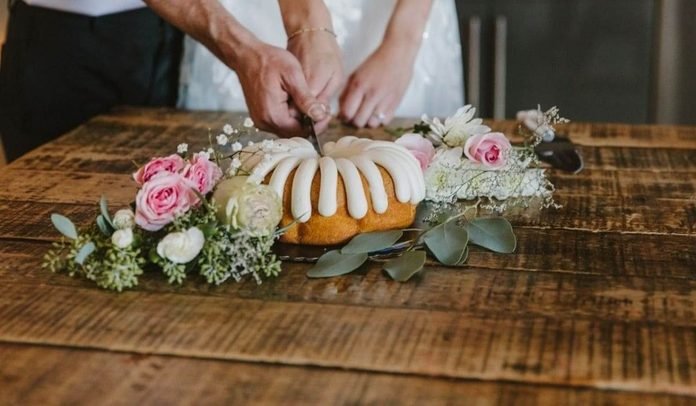
A simple engagement-party centerpiece should be low enough for conversation, stable enough for a crowded table, and fast enough that the host is not trimming stems at 1 a.m. the night before.
The easiest designs repeat one vessel and one material: bud vases with a single flower family, low bowls of citrus, potted herbs, enclosed candles, or small arrangements made from one bunch of greenery. Finish them the evening before, leave space for food and glasses, and skip anything that needs constant misting or complicated mechanics.
These 19 ideas can be completed in one evening with ordinary supplies. Check venue rules for candles, food, plants, water, and surfaces before choosing.
| Table type | Good centerpiece width | Useful height rule |
|---|---|---|
| Small round café table | One small vessel or candle group | Keep below seated eye level |
| Standard round dining table | One low arrangement or three small repeated pieces | Faces across the table should remain fully visible |
| Long table | A loose line of small pieces with gaps | Avoid one continuous barrier down the center |
| Buffet or bar | One larger arrangement at an end or back corner | Keep serving labels and reaching space open |
| Outdoor table | Low, weighted, and wind-resistant | Avoid tall branches, loose paper, and light empty vessels |
1. One-Flower Bud Vases
Buy one or two bunches of a sturdy seasonal flower, trim stems to two or three heights, and place one to three stems in each small vase. Group in odd numbers on larger tables. Clean the glass and change cloudy water before guests arrive. The repetition looks deliberate even when the vessels are mixed.
2. Greenery in Short Bottles
Use eucalyptus, ruscus, olive-like foliage, herbs, or safe garden cuttings you are permitted to take. Choose greenery that will not shed heavily or scent food. Strip leaves below water and keep branches short. Clear or amber bottles create an easy modern line down a long table.
3. Citrus in Low Bowls
Fill shallow bowls with clean lemons, oranges, mandarins, or limes and add a few leaves only if food-safe. Use the fruit after the party. Keep bowls low and not so full that fruit rolls when the table moves. This works especially well for brunch, an aperitivo theme, or bright small-space décor.
4. Pears or Apples With Tiny Place Notes
Arrange firm seasonal fruit in low groups. At a seated meal, add a small name card beside—not pierced into—each piece. Skip the cards at a casual party. Check for bruising, wash fruit, and store correctly so the centerpiece can become breakfast or a take-home treat later.
5. Potted Herbs in Simple Covers
Buy small matching herb pots, water them earlier so tables stay dry, and place each in a clean cover pot or wrapped paper sleeve that does not leak. Use one per small table or three across a long table. Plant or give them away afterward instead of creating décor waste.
6. Rosemary and Lemon Jars
Place short rosemary sprigs and one lemon in wide glass jars or low bowls, keeping water and plant material tidy. The scent should be subtle, so avoid crushing leaves. This design can be assembled in minutes and suits a meal, but it should stay away from open food and allergy-sensitive guests.
7. Enclosed Candle Trios
Group three flameless candles or venue-approved real candles in stable glass holders at varied heights. Use warm tones and keep the group compact. Real flames require clearance from flowers, sleeves, children, and air vents; assign someone to light and extinguish them. Flameless versions are safer for crowded or outdoor tables.
8. Rechargeable Table Lamps
One small rechargeable lamp can be both centerpiece and useful light.
Charge and test every lamp, set a consistent warm level, and keep bases clear of water. Add one tiny bud vase only if the table has room. This feels modern in restaurants and apartments where open flame is not permitted.
9. Floating Flowers Without Floating Candles
Use a wide shallow bowl of water with a few sturdy flower heads or petals that will not disintegrate quickly. Protect the table underneath and fill the bowl in place. Skip floating flames, which add heat and instability. Test the flowers for several hours before committing so the water stays clear.
10. A Small Bowl of Garden Roses
Condition roses earlier, cut stems short, and arrange them loosely in a low watertight bowl with greenery. Five to nine blooms can be enough depending on size. Keep the bowl small so guests retain plate space.
Grocery-store roses look thoughtful when colors are limited and damaged outer petals are removed.
11. Carnations in One Dense Color
Choose a modern color—deep red, peach, butter, white, or plum—and cluster trimmed carnations in a short cylinder or bowl. Their sturdy stems make evening assembly forgiving. Avoid mixing many unrelated colors, and keep the shape loose enough that it does not resemble a formal wedding dome.
12. Baby’s Breath Used Sparingly
Place small airy sprigs in narrow vases rather than building large clouds. The light shape suits a tiny table and can be prepared quickly. Check scent and shedding, remove damaged pieces, and keep it away from open flame.
Pair with clean tableware so it feels intentional rather than filler.
13. Mini Produce and Flower Still Lifes
Combine two pieces of sturdy produce with one small vase: tomatoes and red flowers, pears and greenery, or artichokes and white blooms. Keep all decorative produce whole and clean. Use only combinations that suit the menu and season; random food props can feel styled rather than personal.
14. A Stack of Favorite Books
Use two or three inexpensive or personally owned books with attractive covers, topped by a bud vase or flameless light. Choose titles the couple truly likes and protect valuable editions from water. Keep stacks low and stable. This works best at a bookish home party, not as generic vintage decoration.
15. Framed Relationship Photos With One Stem
Place one small approved photo in a stable frame beside a single bud vase. Use a different image on each table only when guests will enjoy moving among them.
Print copies rather than using originals, and keep glass away from candle reflections. The photo should be visible without becoming a tall barrier.
16. A Single Branch in a Weighted Vase
Choose one sculptural branch or leafy stem for a buffet, console, or large table, not a crowded dining table. Use a heavy vessel, trim it to a safe height, and test balance. Never cut from public or private landscaping without permission. This gives vertical interest with very little material.
17. Small Terracotta Pots With One Bloom
Use clean small pots with fitted liners and one compact flowering plant or simple cut-flower insert.
Avoid loose soil on dining tables. Repeat the same pot color to unify the room. Afterward, plant the flowers or offer them to willing guests rather than treating them as compulsory favors.
18. Folded Linen and a Menu Card
For food-centered tables, the “centerpiece” can be a neatly folded runner or linen with one large readable menu card in a low holder. Add two small candles or one vase if space allows. This preserves table room and gives guests useful information, especially for family-style service with unfamiliar dishes.
19. Nothing but Beautiful Shared Food
At a family-style dinner or brunch, platters may be the centerpiece. Use attractive serving dishes, space them for safe reaching, and add no extra objects between them. Hot, heavy, or saucy food needs trivets and stable surfaces. The table looks abundant because it is ready to serve guests.
Your One-Evening Assembly Order
- Wash and dry vessels, bowls, frames, or pots.
- Condition flowers and greenery before trimming final lengths.
- Build one sample on the actual table or a measured surface.
- Photograph it, then repeat using a simple count per table.
- Label completed pieces by table or location.
- Store flowers cool, keep lamps charging, and leave real candles unlit.
- Pack a small repair kit with a towel, scissors, matches only if permitted, and spare batteries where relevant.
Do not assemble water-filled arrangements over rented linens. Add water on a protected counter, wipe every base, and transport pieces in divided boxes.
Choose the Centerpiece From the Table’s Real Job
A dining table needs room for plates, glasses, water, serving dishes, elbows, and conversation.
A cocktail table needs almost its entire top available. A buffet can support one arrangement at the back or end, provided guests can reach food safely.
Set the complete place settings and food platters before measuring the leftover centerpiece space.
Do not design on an empty table and discover later that every arrangement must move.
Calculate Pieces by Table, Not by Inspiration Photo
| Table setup | Simple recipe | Preparation note |
|---|---|---|
| Small café table | One bud vase or one rechargeable lamp | Keep the base narrow and stable |
| Round dining table | One low bowl or a trio of small pieces | Test sight lines from every seat |
| Long dining table | Small repeated pieces with generous gaps | Leave openings for shared platters and water |
| Buffet | One larger piece at a back corner | Keep labels, utensils, and reaching zones clear |
| Outdoor table | Weighted low vessel or food-based bowl | Remove loose paper, tall stems, and open flame |
Count the actual tables, add only a small repair reserve, and stop. Extra arrangements create extra transport, water, cost, and cleanup.
Condition Flowers Before the Assembly Evening
Unwrap flowers, clean the bucket, trim stems appropriately, remove damaged foliage and leaves that would sit below water, and let them hydrate in a cool place. Follow guidance for the specific flower rather than assuming every stem needs the same treatment.
Only after hydration should you cut final lengths. This makes assembly faster and helps identify weak stems before they reach a table.
Protect the Table From Water and Wax
Check every vessel for leaks by leaving it filled on a protected surface. Wipe bases before placement and use discreet trays or coasters where appropriate. Keep towels and a small pitcher nearby for final water adjustments.
Real candles need stable holders and venue permission. Trim wicks according to the product guidance, protect from drafts, and assign lighting and extinguishing. Never place flame under branches or beside paper captions.
Transport Centerpieces in the Order They Will Be Used
Use divided boxes, bottle carriers, towels, or crates that keep vessels upright. Label each box by table or zone. Transport water separately when full vessels would spill, but confirm there is a safe filling station and time at the venue.
Heavy pieces go low in the vehicle. Flowers stay out of extreme heat or cold. Do not ask the couple to carry open water arrangements in their proposal clothes.
Use a Sample to Train Helpers
Make one complete centerpiece and photograph it from the front and above. Write the stem or object count and spacing. Helpers can repeat the design without interpreting a mood board.
Allow small differences—flowers are natural—but keep height and footprint consistent. The goal is a family resemblance, not identical mechanical domes.
Keep Food-Based Designs Truly Food-Safe
Wash produce, keep it whole, and use clean serving-safe containers. Do not mix flowers treated for ornamental use directly with food guests will eat. Separate decorative plant material with a smaller inner vessel or choose only verified food-safe elements.
After the party, inspect and store usable produce promptly. A fruit centerpiece reduces waste only when someone has a plan to eat or donate it appropriately.
Know When Scent Is Too Much
Highly fragrant flowers, herbs, and candles can compete with food or affect sensitive guests. Test several pieces together in an enclosed room; what seems gentle in one vase may become strong across ten tables.
Use unscented candles and lighter plant choices for dining. The room should smell like the meal and clean air, not a fragrance display.
Plan Outdoor Centerpieces for Wind
Choose low heavy bases, fewer stems, enclosed lights, and no loose cards. Test the table with a fan or at the outdoor location. A weighted vase can still tip if the stems create a sail.
Have a “wind edit” ready: remove tall pieces, bring paper indoors, and use fruit bowls or lamps instead. Do not tape décor to rented linens or living plants without permission.
Create a Fast Evening Workstation
- Cover a sturdy counter and gather cleaned tools.
- Group vessels by table and pre-fill only when safe for storage.
- Sort flowers, foliage, fruit, candles, frames, or herbs by design.
- Finish one sample and photograph it.
- Repeat in batches instead of completing one table at a time.
- Wipe vessels and label transport boxes.
- Pack repair supplies separately so finished boxes stay closed.
Use This Troubleshooting Guide
| Problem | Quick correction |
|---|---|
| Arrangement looks sparse | Shorten the vessel or group small pieces; do not automatically buy more flowers |
| Stems fall outward | Use a narrower opening or simple internal support suited to the vessel |
| Table feels crowded | Remove pieces and keep one focal point |
| Outdoor pieces move | Lower the design, add safe base weight, or replace with bowls or lamps |
| Colors feel disconnected | Repeat one dominant color and remove the unrelated accent |
| Not enough matching vessels | Alternate two deliberate vessel families rather than mixing everything randomly |
Assign End-of-Night Destinations
Decide which pieces are rented, borrowed, compostable, reusable, edible, plantable, or offered to willing guests. Label return boxes before the party. Empty water only in an approved sink and keep plant material out of drains.
Do not announce centerpieces as favors unless guests actually want them. A cleanup volunteer can consolidate flowers and ask quietly rather than sending everyone home with an unwanted pot.
Choose Vessels Before Buying Flowers
The vessel opening and height determine how many stems look complete. Collect, rent, or buy the exact number, then make a sample before ordering flowers. A narrow bottle may need one stem; a wide bowl may require internal structure or far more material.
Mixed vessels can work when they share color, material, or shape. Random containers often create more editing work than savings.
Use Grocery-Store Flowers With a Color Plan
Shop by one dominant color and one supporting texture instead of buying every bouquet labeled seasonal. Separate mixed bunches, remove dyed filler that conflicts, and combine like flowers for a calmer look.
Ask what day fresh shipments usually arrive and have a second flower choice. The design should survive substitution without a late-night store search.
Know When to Skip Flowers Entirely
Allergies, scent, travel, extreme weather, a food-filled table, or a very small surface may make lamps, fruit, herbs, books, photos, or nothing at all the better centerpiece. Absence can look intentional when linens and tableware are orderly.
Do not add flowers only because the event is engagement-related. The center of the table belongs to the party format.
Do a Final Sight-Line Test
Place the centerpiece, settings, water, and serving dishes, then seat two people across from each other. They should see full faces and reach shared items without moving the design.
If the arrangement fails, shorten or remove it. Do not plan to relocate every centerpiece once dinner begins; that is evidence it never fit the table.
Frequently Asked Questions
How tall should a centerpiece be?
Low enough for guests across the table to see full faces, unless it is genuinely above sight lines on a suitable structure. For a one-evening design, low arrangements are simpler and safer.
How early can centerpieces be made?
It depends on the material and flower. Hard goods can be cleaned and grouped days earlier; flowers should be conditioned and assembled according to their needs. Test the chosen design rather than assuming every bloom lasts the same.
Can candles be the only centerpiece?
Yes. A compact group of approved enclosed candles or rechargeable lamps can feel complete, especially on a food-filled table. Keep heat, flame, cords, and guest movement safe.
How do you keep centerpieces from looking homemade?
Limit the palette, repeat a vessel family, edit stem lengths, clean every base, and leave breathing room. Precision and restraint matter more than expensive materials.
What if the tables are different sizes?
Create a design family rather than forcing identical arrangements: one bud vase on small tables, three on rounds, and a spaced line on long tables. Keep color and material consistent.
Should centerpieces become favors?
Only when guests actually want the item and transport is easy. Plants, fruit, or flowers can be offered at the end, but nobody should be pressured to take cleanup home.
Make the Centerpieces the Same Day Only When the Material Requires It
Same-day work creates pressure. Clean vessels, sort supplies, charge lamps, print cards, and build nonperishable pieces earlier. Leave only fresh water, delicate food, and flowers that genuinely need late handling.
Write the morning tasks in order and assign help. “Simple” should describe the workload as well as the look.
Photograph Each Table Before Guests Sit
Take one quick wide image to record the arrangement, then stop adjusting. Check that water is clean, candles are safe, lamps work, and food space remains open.
The table is now ready to become less perfect through use. That is not damage to the design; it is the reason the design exists.
Keep Spare Materials Out of Sight
Store extra stems, candles, batteries, towels, and repair tools in one labeled box away from guest tables. Bring the box out only for a real correction. Visible backup supplies make a finished room feel like setup never ended.
Assign one helper to carry that box and approve repairs. Too many people adjusting tables will undo the consistent spacing established during setup.
Once the sample is repeated safely, stop adjusting pieces that already work.
That restraint keeps the tables useful from welcome through cleanup.
Final Thoughts
The best simple centerpiece leaves room for the people, plates, and conversation it is meant to support. Repeat one low idea, use materials that can be eaten, planted, or reused, and complete the work before the party morning.
If guests can see one another and the host is not repairing arrangements during the toast, the design is doing its job.