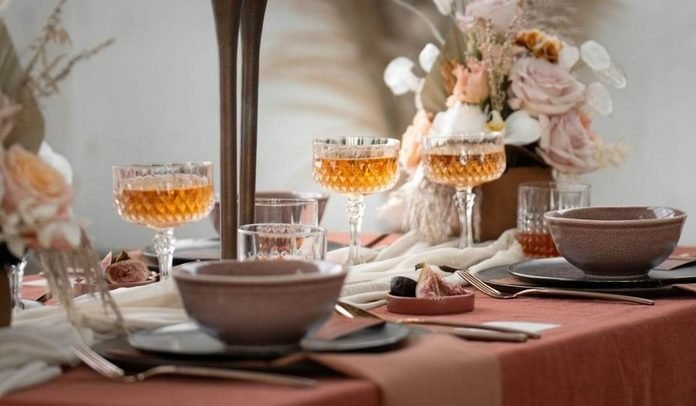
Small spaces do not need smaller versions of ballroom décor. They need fewer objects, clearer surfaces, better light, and a layout that lets guests move without turning sideways around a balloon wall.
Modern engagement-party décor works especially well in an apartment, townhouse, restaurant room, or compact studio because it relies on shape, color, texture, and repetition instead of volume.
One strong table, a clean photo moment, and warm layered lighting can carry the entire room.
Plan the guest experience first. If coats, food, drinks, chairs, gifts, and trash do not have places, decorations will make the room feel more crowded no matter how beautiful they are.
Measure the Usable Space, Not the Room’s Listing
Record the clear floor area after permanent furniture, doors, radiators, kitchen access, and walkways. Mark where guests enter, get drinks, reach food, sit, and use the restroom. Keep exits and accessible routes open.
Use painter’s tape to test furniture footprints only on surfaces it will not damage. A six-foot buffet and a six-foot photo wall may both fit on paper but create a bottleneck when people stand in front of them.
| Small-space problem | Modern solution | What to remove |
|---|---|---|
| Too many surfaces | Choose one styled table and keep others functional | Scattered mini displays and signs |
| Low or harsh light | Layer lamps, safe candles, and one directed light source | Bright overhead lighting as the only plan |
| No dedicated backdrop | Use an existing wall, curtain, artwork, or window edge | Large freestanding arches that consume floor space |
| Limited dining room | Use a mix of café seating and standing ledges with enough chairs | Oversized lounge rentals and low tables |
| Visual clutter | Repeat one color and one vessel shape | Many unrelated fonts, props, and personalized objects |
| Narrow entrance | Move coats and gifts into a bedroom or staffed closet | Welcome tables blocking the door |
Choose a Two-Color Base and One Accent
Use the room’s existing walls, floor, and furniture as part of the palette.
Add one main party color and one smaller accent through napkins, flowers, fruit, candles, or paper. Several shades of the same color create depth without visual noise.
Do not treat this as the wedding palette unless the couple wants that.
A modern party can use tomato red, cobalt, citrus, olive, plum, or soft neutrals simply because they suit the room and season.
Let One Table Carry the Design
Choose the dining table, buffet, kitchen island, or console as the main visual moment. Use a cloth or runner, low vessels, a few candles, and food arranged with space. Repeat only a small part of that idea elsewhere.
When every shelf, windowsill, and side table is decorated, guests have nowhere to set a glass.
A single complete composition looks more confident than ten partial ones.
Create Vertical Interest Without Building a Wall
Use existing picture rails, curtain rods, shelves, or tall vessels only when they are secure and the venue permits. A narrow fabric panel, one framed phrase, or a row of photos can draw the eye upward.
Avoid leaning unstable panels where guests may brush them and do not tape directly to delicate paint. Freestanding structures need weighted bases and often consume more depth than expected.
In a small room, the best backdrop is frequently already part of the architecture.
Use Lighting as Decor
Turn off harsh ceiling lights only after adding enough safe light for faces, steps, food, and cleanup. Table lamps, floor lamps, enclosed candles, rechargeable lamps, and venue-approved string lights create layers.
Keep cords along walls and away from doors. Test photographs at party time; an atmospheric room can still be too dark for guests to recognize food or move safely. Warm does not mean dim.
Choose Low, Repeated Florals
Three to seven small arrangements often suit a compact space better than one huge centerpiece. Use the same flower family or foliage in simple vessels, with enough variation to feel natural. Keep scent light around food.
Place flowers where they will not be knocked by sleeves or block conversation. Grocery-store flowers can look modern when stems are edited, colors are limited, and leaves below the water line are removed.
Decorate With Food Intentionally
Citrus, tomatoes, pears, bread, herbs, pastries, and drinks can provide color and shape. Use food-safe bowls and platters, and keep decorative whole produce separate from cut or perishable service.
This approach saves surface space because the display is useful. It also avoids filling the apartment with engagement-specific objects after the party. Do not leave food at unsafe temperatures simply because it completes the look.
Keep the Entry Almost Empty
Guests need room to step inside, remove coats, close umbrellas, and understand where to go. Use one small sign only if the correct door is unclear. Move the guest book farther into the party, where people can write without blocking arrivals.
Store coats in a bedroom, closet, or staffed rack. Gifts and cards also need a secure location away from the door. A clear entrance makes the whole space feel larger.
Separate Food and Drinks
Even in a tiny room, place water and drinks away from the main buffet so two lines do not merge.
A kitchen counter can hold food while a console holds beverages. Put cups, ice, openers, napkins, and trash where guests can use them without asking.
If space allows only one station, serve food in waves or use passed bites. Do not build a decorative bar that occupies the only working counter.
Use Furniture Already in the Space
Move only pieces that improve flow and can be stored safely. A sofa, dining chairs, stools, and one borrowed bench may be enough. Mixed seating looks modern when colors or materials relate.
Avoid filling a small room with low lounge rentals that reduce capacity and make eating awkward. Count actual seats for the people who need them, then keep clear standing space for everyone else.
Make the Photo Area Part of the Room
Choose a wall with clean light, one art piece, a curtain, or a simple fabric panel.
Add a low arrangement or one chair only if it helps. Guests can take photos without entering a separate installation.
Leave enough distance for the camera; a four-foot-wide wall may require the photographer to stand in the food line. Test the angle before decorating and remove items that create reflections or awkward tangents behind heads.
Use Photos in One Curated Group
A row of five frames, a narrow ledge, or one album feels calmer than pictures scattered across every surface. Choose consistent matting or print sizes, but do not worry about identical frames if the room is already eclectic.
Keep captions short and avoid displaying private images without the couple’s approval. The photo group should invite conversation and then release the guest, not require a twenty-minute tour.
Limit Signs to Information Guests Need
A welcome sign may be unnecessary when everyone knows the apartment. Food labels, drink names, allergy notes, and a guest-book prompt are more useful. Keep fonts readable and designs consistent.
Avoid placing the couple’s names and engagement date on every surface. Modern design benefits from restraint, and guests already know whose party they are attending.
Choose Tableware That Does Not Create Storage Trouble
Rent, borrow, or use simple pieces you already own. If using disposables, choose sturdy food-appropriate plates and plan waste sorting. Tiny decorative plates create multiple trips and spills.
Keep one color or material consistent, then allow mixed glasses or serving pieces. A complete set is less important than having enough forks, napkins, and cups without washing dishes during the toast.
Control Balloons Instead of Letting Them Control the Room
A small cluster near the ceiling or one entry point can work. A floor-to-ceiling garland often consumes wall, doorway, and floor depth while creating noise and waste. Check venue rules, pets, children, and latex allergies.
Never release balloons outdoors. If the room is already visually active, skip them and use color through paper, flowers, or food.
Plan Coats, Bags, Gifts, and Trash as Part of the Layout
These items appear whether or not they are on a mood board. Give them closed or visually quiet zones: a bedroom rack, secure gift table, labeled recycling area, and lined bins near service.
Empty trash before overflow and keep cleaning supplies accessible but out of sight. The small space remains beautiful because the practical systems keep surfaces clear throughout the event.
Edit the Room One Final Time
Take phone photos from the entrance, the couple’s seat, and the main guest area. Remove anything that competes with faces, blocks a route, or repeats an idea unnecessarily. Check labels, cords, flame clearance, and furniture stability.
If the room looks sparse before guests arrive, remember that people, coats, plates, and movement will add visual density. Leave breathing room for the party itself.
A Small-Space Decor Shopping List
For many parties, the list can be short: one cloth or runner, napkins, five small vessels, one or two flower bunches, a group of safe candles or rechargeable lamps, simple food labels, and prints for one photo display.
Add only the items required by the actual venue. Buying a backdrop, balloon frame, cake stand, and custom signs because they are common in pictures can make a compact room harder to use and more expensive to clean.
Set the Guest Count Before the Decor Concept
A small space can look spacious for ten people and uncomfortable for twenty-five. Count chairs, standing room, serving zones, coats, bags, restroom access, and the photographer’s working distance. Use the lower number created by comfort and fire or venue rules.
Reducing the guest count or changing to an open-house format may improve the experience more than any layout trick. Decor cannot make unsafe capacity feel generous.
Draw the Layout in Guest Movement Order
| Zone | Best location | Keep out of it |
|---|---|---|
| Entry | Clear sight from the door with nearby coat storage | Photo backdrop, gift pile, and first drink line |
| Drinks | A side console or kitchen edge away from food | Tight corners where guests cannot step aside |
| Food | Largest stable surface with access from one or two sides | Tall decor and loose candles |
| Seating | Small groups around the perimeter and a few tables | All chairs in one rigid audience row |
| Photos | Existing wall with usable camera distance and light | Door swings, mirrors, and buffet traffic |
| Gifts and cards | Secure room or supervised quiet corner | Open doorway and coat pile |
Use Negative Space Deliberately
Leave part of the wall blank, part of the table clear, and gaps between decorative groups. Empty space allows the eye to understand shape and gives guests somewhere to put a glass or stand for a conversation.
Modern style is not achieved by purchasing modern-looking objects. It comes from editing, repetition, alignment, and enough room around each choice.
Choose Scale From Viewing Distance
A huge welcome sign read from three feet away feels clumsy; tiny labels in a dim room are useless. Ask where the guest stands when using each item. Main wall art can be larger, while table labels should be readable at arm’s length.
Keep floor pieces narrow enough that people do not kick them. Raise a single arrangement only on a back buffet where it does not block faces or food.
Make Rentals Earn Their Footprint
Every rented piece should add seating, service, light, or a clearly useful visual anchor. A bar cart can hold the complete drink station; an arch that exists only for one photo may consume the same space while serving nobody.
Measure doorways and elevators, confirm delivery windows, and identify where removed furniture will go. Do not stack the host’s belongings in a visible corner and then cover them with fabric.
Protect Walls, Floors, and Furniture
Get permission before adhesives, nails, candles, confetti, plant water, or furniture movement. Use trays under flowers and drinks, coasters on wood, felt under heavy pieces, and cable covers where approved.
Keep a stain and spill kit nearby. Assign one helper to notice water rings and overflowing bins. The security deposit is part of the decor budget whether or not it appears in photos.
Use Sound to Make the Space Feel Larger
Keep music low and distribute sound rather than blasting one speaker from a corner. Hard surfaces can make a compact room painfully loud once guests arrive. Rugs, curtains, upholstery, and smaller speaker volume help conversation.
Test the microphone only if the group genuinely needs one. A host can often welcome thirty people from the center of a quiet room without amplified sound.
Three Modern Small-Space Plans
For an apartment brunch
Use the dining table as a buffet, put coffee on a console, keep sofa and dining chairs around the room, and use five bud vases in one color. Hang no backdrop; take photos near the best window and existing art.
For a restaurant room
Let the venue tables and lighting lead. Add cloth napkins, one low fruit-and-flower arrangement per table, and five framed photos on the welcome console. Store gifts with staff and skip balloons.
For a narrow studio
Place food at the far end so guests move into the room, drinks halfway down the opposite wall, seating along the perimeter, and one fabric panel on the back wall. Keep the center open for circulation and the toast.
Create a Small-Space Setup Order
- Remove clutter and store coats, valuables, and unnecessary furniture.
- Set functional furniture and test every walkway and door.
- Place food, drinks, water, bins, and gift storage.
- Add lighting and secure cords.
- Style one main table and one wall or photo area.
- Add labels and flowers only where surfaces remain usable.
- Stop, photograph the room, and remove at least one unnecessary piece.
Keep Personalization Small and Legible
Use names once at the entry, menu, or photo display. Repeating initials on cups, napkins, wall art, favors, and cake makes a compact room feel branded. Modern personalization often looks better as one thoughtful sentence or approved photograph.
Spend print effort on directions, allergy labels, and a guest-book prompt that people can actually read.
Use Mirrors Carefully
Mirrors can reflect light and visually extend a room, but they also reflect bins, cords, photographers, crowded doorways, and open private rooms. Check every angle before relying on them as a backdrop.
Do not place candles or lights where the reflection doubles glare into guests’ eyes. Existing mirrors are useful; adding large leaning mirrors can create a safety problem.
Create One Storage Room
Choose a bedroom, office, or staff space for empty boxes, coats, spare supplies, vendor bags, and gifts. Keep the route clear and the door controlled. Scattered hidden piles tend to reappear during service.
Label what must return to vendors and what belongs to the couple. The visible room stays calm because the invisible logistics have a home.
Photograph the Room With People in Mind
Before guests arrive, capture the finished design. During the party, prioritize faces, groups, toasts, and movement rather than repeatedly photographing objects. Ask the photographer not to move functional furniture for a cleaner scene.
The room has succeeded when it supports the people inside it. Its best image may be crowded with conversation.
Frequently Asked Questions
How do you make a small room look less crowded?
Reduce guest count or furniture first, clear the center path, keep surfaces functional, store coats and boxes elsewhere, and repeat one low decorative idea. More vertical décor does not fix poor circulation.
Are balloon garlands good for small spaces?
A compact cluster may work, but large garlands consume wall and floor depth and add waste. Measure the full installed footprint, check latex concerns and venue rules, and never block doors or vents.
What is the best small-space backdrop?
An existing wall with usable light and enough camera distance. Curtains, art, a photo row, or one narrow fabric panel usually works better than a freestanding arch.
How many colors should be used?
Two base colors and one small accent are an easy guide, but the existing room counts. Several shades of one color can feel layered without adding visual noise.
Should furniture be removed?
Only pieces that harm flow and can be stored safely. Keep enough real seating and useful surfaces. Emptying a room can create awkward standing space rather than a better party.
Can candles be used?
Use venue-approved real candles with safe clearance and supervision, or good flameless options. In a small crowded room, rechargeable lamps often provide cleaner, safer light.
Where should gifts go?
In a secure supervised corner or separate room away from the entrance, coat pile, and food. Cards should have one named person responsible for transport after the party.
Let Guests Supply the Final Layer
People bring color, movement, coats, bags, glasses, and conversation. A room that looks restrained when empty often feels complete ten minutes after arrivals.
Do not fill every blank area in response to a setup photo. Take one picture with two helpers standing and sitting in the room; scale becomes easier to judge.
Clean Before You Style
Windows, mirrors, glassware, tables, baseboards near the photo wall, and the restroom influence the sense of polish more than another decorative purchase. Finish deep cleaning earlier so products and equipment disappear before setup.
On party day, keep only a small spill kit accessible. Modern decor needs a calm background, and cleanliness provides it.
Plan the Room at Its Busiest Minute
Picture every guest inside with coats stored, drinks in hand, buffet open, photographer working, and one person moving toward the restroom. If the layout fails at that minute, fix flow now. The empty-room photograph is not the capacity test.
Also test the room with chairs pulled out and cupboard or refrigerator doors open. Service requires more clearance than a static floor plan shows, especially when guests gather beside the kitchen.
If guests can move easily at the busiest moment, the layout is ready.
Final Thoughts
Modern décor in a small space is mostly editing. Use the existing room, repeat one visual idea, layer the light, and protect every path and surface guests need.
When people arrive, the space should feel full of energy—not full of things.