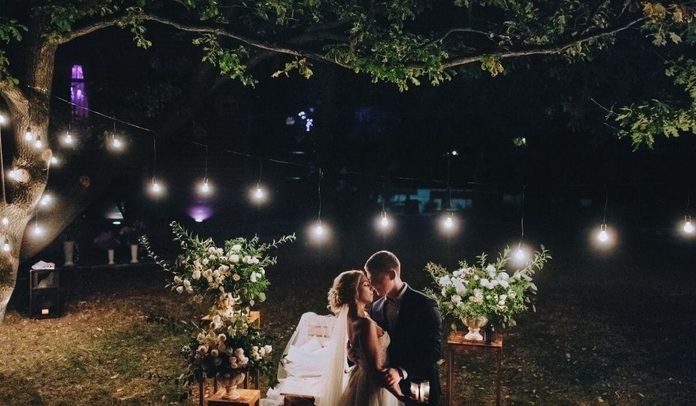
A 5 p.m. ceremony gives a wedding day a pleasant shape. The morning can begin without a punishing alarm, portraits can happen in the afternoon, and guests move naturally from the ceremony into drinks and dinner. It can also create a false sense of abundance.
Noon arrives, hair and makeup is still running, and the “whole day” suddenly contains three hours before guests take their seats.
The sample below is built to prevent that squeeze. It assumes a first look, one venue for portraits, ceremony, and reception, a moderate wedding party, a seated dinner, and an 11 p.m. finish. It includes visible transition and quiet time instead of treating every unscheduled minute as available for another photograph.
Use it as a model, then replace every estimate with information from the booked beauty team, photographer, officiant, venue, caterer, transport provider, and entertainment lead. Their real working times matter more than any sample found online.
The assumptions behind this 5 p.m. timeline
| Planning detail | This sample assumes | Move the schedule if |
|---|---|---|
| Locations | Getting ready and all main events are on one property | Any move requires lifts, loading, traffic, parking, or a long walk |
| Photography | The couple has a first look and completes most portraits before the ceremony | There is no first look, sunset is early, or the family list is extensive |
| Beauty services | The contracted team supplies enough artists for the booked services | A large party, complex looks, or one artist creates a longer service block |
| Ceremony | The ceremony lasts about 30 minutes | Religious, cultural, translated, or legal elements require more time |
| Reception | Cocktail hour, seated dinner, several short speeches, and dancing | There is a room flip, buffet queue, long programme, outfit change, or early curfew |
One changed assumption can move several lines.
A 20-minute drive does not only add 20 minutes; it adds gathering, loading, unloading, and settling.
A ceremony that lasts an hour also moves cocktail hour, dinner, and every reception cue unless the start time changes.
The complete sample timeline
| Time | Couple and wedding party | Vendor and guest movement | Why it sits here |
|---|---|---|---|
| 9:00 a.m. | Room opens; breakfast is available; first beauty clients arrive | Beauty team unloads and sets up; room contact handles access | The bride is not responsible for opening the room |
| 9:30 a.m. | Beauty services begin according to the professional schedule | Coordinator checks deliveries and venue setup separately | Start time comes from service count and artist capacity |
| 12:00 p.m. | Lunch arrives; people eat between services | Named room contact receives and clears food | Food is finished before formal clothing appears |
| 12:30 p.m. | Bride’s final services continue; personal details are gathered | Photographer arrives for details, room atmosphere, and final preparation | Photography begins after the room has found its rhythm |
| 1:30 p.m. | Attendants and dressing helpers put on wedding clothes | Beauty team completes bride and planned touch-ups | Helpers are camera-ready before the bride dresses |
| 2:00 p.m. | Bride uses the bathroom, dresses, and adds accessories | Photographer documents selected parts; coordinator limits room traffic | The outfit receives a real dressing window |
| 2:45 p.m. | First look followed by a few private minutes | Photo team positions the couple; coordinator keeps the area private | The reaction is not swallowed by immediate posing |
| 3:05 p.m. | Couple portraits | Venue team continues guest-area preparation | Portraits happen before guests enter the property |
| 3:35 p.m. | Wedding-party portraits and selected immediate-family groups | Named family helpers gather the people on the shot list | Pre-ceremony groups reduce pressure after the vows |
| 4:15 p.m. | Portraits end; couple separates, refreshes, and goes out of guest view | Musicians and ceremony participants receive final checks | A 45-minute pre-ceremony cushion remains |
| 4:30 p.m. | Wedding party stages at the agreed location | Guest arrival begins; ushers, music, water, and seating are ready | Guests have a hosted arrival rather than a fake start time |
| 5:00 p.m. | Ceremony begins | Cocktail service completes final setup | The invitation time matches the intended start |
| 5:30 p.m. | Couple pauses privately, then completes remaining family photographs | Guests move to cocktail hour; ceremony space begins reset if required | A short pause comes before the next photo list |
| 6:10 p.m. | Couple eats a small plate, uses the bathroom, bustles, and sees the reception room | Coordinator gives a brief reception update; guests begin finding seats at 6:25 | Twenty minutes belongs to the couple, not another formality |
| 6:40 p.m. | Couple enters; short welcome or blessing follows | Caterer receives service cue after guests are seated | Dinner is not held behind a long opening programme |
| 6:50 p.m. | Dinner service begins | Supplier meals are served at the agreed working point | The couple has time to eat before table visits |
| 7:45 p.m. | Planned speeches begin between service moments | Entertainment lead cues speakers; caterer pauses service as agreed | Speeches have a stated number and length |
| 8:10 p.m. | First dance and any selected parent dances | Band or DJ opens the dance floor immediately afterward | Formal dances lead somewhere instead of stopping the room twice |
| 8:25 p.m. | Open dancing and unstructured guest time | Bar, music, and service continue | Guests receive a long stretch without announcements |
| 9:15 p.m. | Cake or dessert moment if the couple wants one | Caterer begins dessert service; entertainment keeps the interruption brief | Dessert does not delay the first hour of dancing |
| 10:30 p.m. | Final planned dance or private last dance | Last call, transport reminder, and personal-item check begin | The finish is organised before the contractual end |
| 11:00 p.m. | Couple departs or joins the final guest send-off | Named people secure cards, documents, gifts, attire, and hired items | Departure does not depend on the couple cleaning up |
Why the morning starts earlier than many couples expect
The 9 a.m. room opening is not a universal beauty start. It is a placeholder for a professional schedule that must account for the number of hair and makeup services, how many artists work at once, setup, touch-ups, and the time everyone needed for photographs must be dressed.
The bride’s hair and makeup should finish before her dressing window, not at 2 p.m. because the schedule says dressing starts at 2. A small cushion protects against a late client or final adjustment.
The bride is often better placed in a stable middle or later-middle service position than automatically last; the beauty lead should decide.
If ten people want both services and only one hair artist and one makeup artist are booked, the answer may be another professional or fewer services. An extremely early start can look efficient on paper and leave the whole party tired before the ceremony.
What the photographer is doing before the first look
A 12:30 arrival gives the photographer time to greet the room, understand the light, photograph selected details, and document the final part of preparation. It does not require the bride to pretend to apply makeup for two hours.
Place rings, invitation pieces, shoes, jewellery, and other requested objects with one named attendant.
Valuable items should be returned immediately after details. The photographer should not spend the first 20 minutes searching three rooms for an earring.
The 2 p.m. dressing block includes more than putting on a garment. It may involve base layers, buttons, corsetry, jewellery, veil placement, final beauty touches, and a comfort check.
A simple outfit may need less. Traditional or highly structured clothing may need much more.
Why portraits finish 45 minutes before the ceremony
Guests may begin arriving by 4:30. The couple needs to move out of public areas, use the bathroom, cool down or warm up, touch up, drink water, and receive a final ceremony cue.
The photographer may also need ceremony-room images before seats fill.
That 45 minutes is not wasted. It protects the ceremony, the one part of the day that should not begin with everyone running. If portraits run smoothly, the couple experiences a calm pause. If they do not, the ceremony still has a chance to start on time.
Do not fill the cushion in advance with another reveal, extra location, or “quick” photo list.
Optional additions consume buffer before the delay they were meant to protect has even happened.
The first look is useful, but it should not become a photo marathon
A first look creates the option to complete couple and wedding-party portraits before the ceremony. It can also give the couple a private meeting before guests arrive. Its value disappears if ten people surround them with phones or the photographer immediately begins issuing poses.
Keep the reveal itself simple, then give the couple a few minutes. Build the portrait list around priorities.
Thirty minutes of couple portraits and roughly 30 to 40 minutes for the wedding party and selected family may be appropriate in this sample, but the photographer must adjust for group size, mobility, locations, and the couple’s goals.
If a parent, sibling, or wedding-party reveal is also planned, schedule it separately and count the time to gather everyone.
Several emotional “first looks” back-to-back can make the morning feel staged rather than intimate.
How the timeline changes without a first look
Keep separate portraits before the ceremony: each partner alone, each side of the wedding party, and family groups that do not reveal the couple to each other. Finish those early enough to preserve the same pre-ceremony calm.
After the ceremony, the couple now needs time for couple portraits, the full wedding party, and combined family.
A standard 60-minute cocktail hour may be tight. The options are straightforward:
- Extend cocktail hour and host guests comfortably for the full period.
- Reduce the portrait list to the groups and couple images that matter most.
- Move selected family groups before the ceremony.
- Choose an earlier ceremony if daylight is essential and sunset is early.
Do not promise the first-look quantity of photographs in half the time. The schedule should reflect the couple’s decision, not pretend it has no consequence.
If the ceremony lasts an hour, move more than dinner
A religious or cultural service from 5 to 6 p.m. may still be followed by guest exit, signing, greetings, and travel.
Cocktail hour might not begin until 6:15. A 6:40 reception entrance from the main sample is no longer possible.
Choose the response with the venue and caterer: begin the ceremony earlier, serve dinner later, reduce post-ceremony portraits, or extend the contracted reception.
Do not keep the same dinner time by compressing a meaningful ceremony or expecting the kitchen to hold finished food.
Tell guests the real event rhythm, particularly if there is a long gap or a move between locations. A longer ceremony is not a problem. An unchanged reception schedule that ignores it is.
A no-first-look version of the critical afternoon
| Time | Revised action | Planning consequence |
|---|---|---|
| 2:45 p.m. | Separate partner, wedding-party, and possible family portraits | People must be kept in separate locations without delaying groups |
| 4:00 p.m. | All pre-ceremony photographs end | Both partners receive private reset and hiding time |
| 5:30 p.m. | Couple pauses briefly, then begins combined family and wedding-party portraits | A prepared shot list and family wranglers are essential |
| 6:00 p.m. | Couple portraits | Light and travel determine the real length |
| 6:35 p.m. | Couple refreshes while guests take seats | Reception entrance moves later unless photo time is reduced |
| 6:55 p.m. | Reception entrance and dinner | Catering must approve the later service plan |
Winter light can change the entire photograph plan
A 5 p.m. ceremony may begin after sunset in winter.
Couples wanting natural-light portraits should check the date and location before choosing a no-first-look schedule.
The answer may be a first look, an earlier ceremony, indoor portrait locations with professional lighting, or a photography style that embraces darkness.
Do not place “golden-hour photos” into the reception simply because they appear on another couple’s timeline. Golden hour changes by season, latitude, terrain, and weather. Ask the photographer what light is realistic at the venue.
If portraits pull the couple from dinner, coordinate with the caterer.
A ten-minute photo session can become a 25-minute absence once the couple leaves the room, walks to the location, and returns.
Add real door-to-door time for separate locations
For a hotel-to-church journey, start with the required arrival at the church. Work backward through settling in a private room, unloading, parking, the drive, loading the wedding party, gathering flowers and bags, waiting for lifts, and leaving the suite.
A map showing 15 minutes might require a 35- or 45-minute schedule block.
Test the route at a similar day and time. Account for city events, rural roads, security gates, ferries, and the fact that formal clothing changes how quickly people move.
Do not steal this time from the pre-ceremony cushion. Move beauty and photography earlier. Travel is part of the day, not an interruption that everyone can rush through.
Tell guests when arrival begins without changing the ceremony time
Keep 5 p.m. as the ceremony start on the invitation. Add “doors open at 4:30 p.m.” or place the arrival guidance with transport and parking details. Listing 4:30 as the ceremony time to trick guests into punctuality leaves considerate guests seated for an unexplained half hour.
The arrival window needs a real experience: music, ushers, water where appropriate, open facilities, and weather comfort. .
For a venue with remote parking, security, coat check, or several lifts, guests may need more than 30 minutes. Ask the venue how long a similar guest count takes to reach seats.
Late guests also need a plan. Decide who holds them, which entrance they use, and when they may enter without crossing the processional. That decision belongs with the venue and coordinator, not with a family member turning around during the vows.
Keep the cocktail hour from becoming hidden production time
Cocktail hour in this sample serves several jobs: guests move, portraits finish, the couple resets, and the reception room prepares. It must still feel like a hosted part of the wedding.
Provide seating, food, drink, weather comfort, and enough staff for the guest count.
If the ceremony room is being transformed, ask the venue how long the flip actually takes. If the couple needs 70 minutes of portraits, calling the period “cocktail hour” does not make it 60.
The couple’s 6:10 pause should stay protected. This is the moment to bustle, eat, use the bathroom, and look at the reception room before guests fill it. It should not quietly become time for another family combination or a supplier meeting.
Let dinner determine where speeches belong
The sample places speeches after the main period of meal service, but the booked caterer may prefer another point. Ask when food leaves the kitchen, when plates are cleared, and whether staff can pause without affecting quality.
Give each speaker a time limit and tell the entertainment lead the order. “Three speeches” can mean twelve minutes or 45.
If additional people want to speak, the rehearsal dinner or another gathering may be a better fit.
Avoid putting introductions, a long welcome, blessing, first dance, parent dances, and four speeches between seated guests and food.
The reception can honour traditions without asking the kitchen to hold dinner through a full programme.
How photography coverage affects the sample
This schedule uses roughly ten and a half hours from the photographer’s 12:30 arrival to the 11 p.m. end.
A shorter package requires priorities. Eight hours might cover 1:30 to 9:30, preserving dressing through an hour of dancing but missing early details and the final exit.
Do not manufacture an early cake cutting or staged exit solely for coverage without understanding how it affects guests.
A private last portrait or a natural dance-floor ending may serve the story better than asking everyone to perform departure hours before the bar closes.
Ask the photographer and videographer to coordinate arrival, details, portraits, audio, and reception events. Each needs working space, but the couple should not repeat the same staged moment twice because separate schedules were built.
Create shorter schedules for the people living the day
The master production timeline can include loading, supplier arrivals, room turns, phone numbers, and contingency notes. The couple does not need to read it over breakfast. Give them a personal version showing beauty completion, dressing, photographs, ceremony, private pauses, formalities, and departure.
Give the wedding party individual service calls, dressing time, portrait call, ceremony staging, transport, and any reception responsibility. Family members need only the times they are required for photographs, ceremony roles, and transport. Guests receive arrival and hosted-event information, never backstage production details.
All versions should come from the same master. “Simplified” must not turn a 3:35 portrait call into “around four.” Date the final copy and route questions to the coordinator.
Build the weather version before the forecast becomes urgent
If portraits, ceremony, or cocktail hour may move indoors, ask how the backup changes walking time, light, guest seating, sound, and the room flip. The rain location may be closer but require the reception team to reset the same room under pressure.
Set a decision deadline and name the authorised person. Once the venue begins moving chairs and equipment, several relatives should not continue comparing weather apps and issuing alternate instructions.
The wet- or heat-weather plan should protect guests as well as photographs. Add covered arrival, accessible routes, water or warmth, umbrella handling, and extra time for people to move carefully. A backup timeline is a full operating plan, not the original schedule with the word “inside” added.
Five changes that require a new timeline—not a small edit
- Adding or removing the first look: this relocates the largest portrait block.
- Moving the ceremony to another property: every person, flower, document, and piece of equipment now travels.
- Adding a major cultural or religious ceremony element: the officiant’s real duration moves the entire reception.
- Increasing beauty services: the day may need more artists, an earlier start, or a smaller service list.
- Changing from plated dinner to buffet or stations: guest movement and service timing can change substantially.
When one of these changes, return to the planner and affected professionals. Moving a single line without checking the connected work produces a schedule that appears updated and no longer functions.
A 5 p.m. ceremony should feel like an evening wedding—not a rushed afternoon
The strongest part of this sample is not any exact time. It is the space before the ceremony, the couple’s pause after it, and the long reception stretch when guests are allowed to eat and dance without constant announcements.
Replace the assumptions with the realities of the wedding, then protect those same principles.
Finish professional work before the next event needs to begin. Count movement. Feed people. Let the couple arrive at 5 p.m. feeling ready rather than relieved they made it.