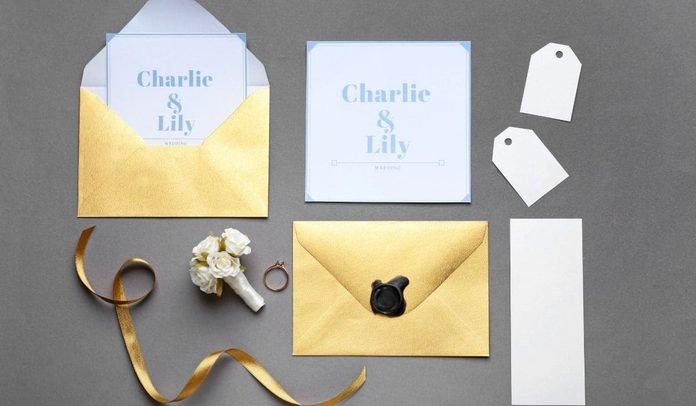
An engagement party invitation has one simple job: help people understand what they are being invited to and make it easy for them to respond.
It does not need to tell the couple’s whole love story or explain the wedding plan.
It does need to answer the small questions guests will otherwise text you about later.
Think of the invitation as a warm welcome wrapped around clear instructions. Guests should be able to look at it once and know who is celebrating, who is hosting, when to arrive, where to go, what kind of party it will be, and how to RSVP.
Anything beyond that should earn its space by helping someone attend comfortably.
If you are worried that practical details will make the invitation feel less beautiful, do not be. Clear wording feels thoughtful.
A lovely design cannot make up for a missing apartment number, an unclear start time, or an RSVP link nobody can type.
The Information Every Invitation Needs
| Invitation detail | What to include | Why guests need it |
|---|---|---|
| Reason for the party | A clear invitation to celebrate the engagement | It prevents the event from being mistaken for a shower, dinner, or wedding |
| Couple’s names | The names the couple actually uses | Guests may know only one partner or know someone by a nickname |
| Date and time | Weekday, full date, start time, and end time when useful | A full date reduces calendar mistakes and an end time sets expectations |
| Location | Venue or host name plus complete address | A business name alone may lead guests to the wrong branch |
| RSVP | Deadline, response method, and contact person | “Let us know” is too easy to postpone |
| Host | The person, couple, family, or group giving the party | Guests know who can answer event questions |
Start With a Clear Celebration Line
The first line should say that this is an engagement party. “Please join us to celebrate the engagement of Maya Patel and Jordan Lee” is enough. A playful line such as “They said yes, so let’s celebrate” can work too, as long as the words engagement party appear somewhere obvious.
This matters because “Join us for drinks honoring Maya and Jordan” could sound like a birthday, farewell, or casual meet-up.
Guests should not have to study the design for clues. If the gathering is actually an engagement shower where gifts are part of the event, name it honestly. A party and a shower create different expectations.
Use Both Partners’ Names
Write the couple’s names in the order they prefer. Modern invitations do not need to place one partner first because of gender.
Full names are useful for a formal party or when the families have not met. First names may feel right for a small backyard gathering where everyone knows the couple.
If one partner commonly uses a nickname, choose the name guests recognize. You can write “Alexandra ‘Alex’ Morgan” if the fuller name helps older relatives, but do not make a simple invitation read like a legal form. The goal is recognition, not formality for its own sake.
Name the Host Without Making the Wording Stiff
The host line tells guests who is giving the party. It can also gently explain the tone. Here are a few natural options:
- Hosted with love by Priya and Sameer Shah
- Given by the couple’s families
- Hosted by Elena’s parents, Rosa and Miguel Torres
- With their families, Chris and Taylor invite you to celebrate
- Hosted by friends of the happy couple
If several people are sharing the work, you do not have to squeeze every name onto the front. “Hosted by their families” or “Hosted by Anna, Marcus, and friends” can be warmer and easier to read. Put the main RSVP contact in the details so guests know whom to message.
Write the Date So It Cannot Be Misread
Use the weekday and the full date: “Saturday, October 10, 2026.” Check that the weekday matches the calendar before printing.
Numeric dates such as 10/11/26 can be read differently by guests from different countries, so spell out the month.
For a digital invitation, add an “Add to calendar” option after the guest opens it, but do not let that replace the visible date.
Calendar files can contain errors too. The invitation itself remains the source guests will screenshot and share within their household.
Give a Start Time and an Honest End Time
Write “6:00 p.m.” rather than “at six” when the design allows. Include the time zone for a virtual event or when guests are joining from several regions. If the party has a firm restaurant reservation, boat departure, surprise reveal, or scheduled toast, say when guests must be present.
An end time is especially kind for brunches, open houses, weeknight events, and parties in a private home. “2:00–4:00 p.m.” tells parents, caregivers, older guests, and anyone working later that they can plan their day.
If the celebration may naturally continue, you can still give the official event window.
Give the Full Location, Not Just the Pretty Part
Include the venue name and street address. For a home party, use the host’s name if that will reassure guests they are at the right place. For a restaurant with multiple locations, add the neighborhood or branch.
Check the address in the map app most guests use and make sure the pin reaches the correct entrance.
Suite number, building name, gate code, floor, or private-room name may belong on a details card or digital event page. Do not publish a private access code on a public social post. Share it only with confirmed guests and tell them when they will receive it.
Make the RSVP Instruction Specific
A good RSVP line includes three things: where to answer, whom to answer, and the deadline.
For example: “Please reply by September 12 at [short link] or text Nina at [number].” If the form is the main method, make the link short and test it on a phone that is not logged into the host’s account.
Ask for the full name of every person attending. If a household has two seats, prefill that number or address both people by name. A blank “number attending” field can accidentally look like permission to add children or a plus-one.
Say What Kind of Party Guests Are Dressing For
You do not need a dress code for a truly casual gathering. Still, the invitation design is not always enough. Guests may not know whether “garden celebration” means sundresses and jackets or jeans and sneakers.
| Party style | Helpful wording | Extra detail that may help |
|---|---|---|
| Backyard party | Casual garden attire | “The lawn is soft, so choose comfortable shoes” |
| Restaurant dinner | Cocktail attire | Add jacket information only if the venue requires it |
| Brunch | Dressy casual | Mention outdoor seating if weather affects layers |
| Very relaxed gathering | Come as you are | Clarify if swimming, games, or walking are planned |
| Formal evening | Formal attire | Use black tie only when you truly expect tuxedos and gowns |
Simple language is better than inventing a clever dress-code name nobody understands. If you want a color theme, present it as optional unless guests are genuinely expected to follow it.
Add Food Information When It Changes the Guest’s Plan
Guests do not need the whole menu, but they may need to know whether the event includes dinner or only drinks and small bites. “Dinner and toasts to follow” creates a different expectation from “Join us for cocktails and cake.” Clear food wording helps guests decide whether to eat beforehand and helps parents plan around children.
Collect dietary needs through the RSVP rather than asking guests to discuss allergies in a public event chat. Only ask if the host or caterer will review and act on the information.
If the venue cannot promise an allergen-free kitchen, communicate that privately and honestly.
Explain Plus-Ones and Children Through Names First
The cleanest way to show who is invited is to address the invitation to those people. Use “Morgan Lee and Guest” only when Morgan truly has a plus-one. List children’s names for a family invitation. For an adults-only celebration, address the adults and add a brief detail such as “We hope you can join us for an adults-only evening.”
Do not make the main invitation sound like a list of restrictions.
A clear envelope, a limited RSVP form, and one kind sentence are usually enough. If a guest asks, answer privately and consistently. Capacity rules feel less personal when the host applies them to every household.
Include Access, Parking, and Transportation Details Where Guests Will See Them
Accessibility is not a decorative extra. If the main entrance has stairs but an accessible entrance is around the building, share that route before someone arrives.
Include a private contact for accommodations. Mention seating, restroom access, sound, lighting, or transportation details when they may affect a guest’s decision to attend.
For limited parking, say where guests may legally park and whether they need a permit. If rideshare drop-off is easier, name the exact entrance. For a shuttle, list departure location and time.
Put long instructions on a details card or event page, then place a short direction on the invitation: “Parking and accessibility details: [link].”
Handle Gift Wording Gently
Engagement party gifts are optional, so registry information usually does not belong on a standard party invitation. If you truly want no gifts, “Your presence is the only present we need” or simply “No gifts, please” is clear. Do not replace it with a poem that leaves guests wondering whether it is sincere.
If guests ask for gift ideas privately, the host can share what the couple likes or say that a card is more than enough. If the event is actually a couple’s shower, call it that and follow shower wording.
Quietly turning an engagement party into a gift event can make people feel unprepared.
Use a Details Card or Event Page Without Hiding the Basics
A separate details space is useful for parking maps, hotel suggestions, meal notes, accessibility, weather updates, and a longer schedule. The invitation itself should still show the date, time, location, and RSVP. Do not make guests scan a code just to discover when the party starts.
For a QR code, print a short written link underneath it. Test the code from the final proof at actual size.
Ask someone who did not help plan the party to open the page and find the address, RSVP, and dress code. If they hesitate, simplify it.
Three Complete Invitation Examples
A Warm Family-Hosted Dinner
With joyful hearts, the Patel and Rivera families invite you to celebrate the engagement of Maya Patel and Lucas Rivera.
Saturday, October 10, 2026 at 6:00 p.m.
Cedar House Restaurant, Garden Room
118 Willow Street, Austin, Texas
Dinner and toasts will follow. Cocktail attire.
Please RSVP by September 20 at [link].
A Casual Backyard Party
They said yes! Come celebrate Nia and Avery with tacos, music, and a relaxed afternoon in the backyard.
Sunday, May 17 from 2:00–5:00 p.m.
At the home of Carla and Ben Owens
42 Maple Lane, Denver, Colorado
Casual clothes and lawn-friendly shoes are perfect.
Please reply to Carla by May 3 at [number]. No gifts, please.
A Simple Couple-Hosted Cocktail Party
We’re engaged, and we’d love to celebrate with you.
Join Jamie Chen and Rowan Brooks for cocktails and small bites.
Friday, November 6, 2026
7:00–9:00 p.m.
North Room at The Linden
801 Market Avenue, Chicago, Illinois
Dressy casual. Please RSVP by October 23 at [link].
Information That Usually Does Not Belong on the Invitation
- The wedding date or venue before the couple is ready to share it
- A long relationship story that pushes practical details out of view
- Registry links for a standard engagement party
- Private family history or a detailed explanation of who paid
- A public guest list or other guests’ RSVP responses
- Several contact numbers that scatter replies across different people
- Unconfirmed plans written as though they are final
- Jokes that make declining sound disloyal
You can share a favorite photo or a short line about the proposal if it fits. Just keep it secondary. The invitation should make the guest feel included, not make them work for the address.
When to Send the Invitation
A common starting point is about four weeks before the party, with more notice for guests who must travel, arrange childcare, or take time away from work. A very small local gathering can sometimes work with two to three weeks.
A holiday weekend, destination event, or formal dinner needs more room.
Do not announce the party before the guest list is tied to the likely wedding list.
Guests invited to an engagement party usually expect a wedding invitation later. If the wedding may be tiny, wait until the couple has decided whom they can confidently include.
Proofread the Invitation Like a Guest
Read the final version without using any information you already know. Can you answer these questions?
- Whose engagement is being celebrated?
- Who is hosting?
- What day and date is it?
- What time should I arrive, and when might it end?
- What is the complete location?
- What should I wear?
- Will there be a meal?
- Exactly who in my household is invited?
- How and when do I RSVP?
- Where can I ask about access, food, or another private need?
Then check every name, number, date, and link with another person.
Call the venue to confirm the official address and room name.
Send a test RSVP. These tiny checks are not exciting, but they save the host from answering the same worried question twenty times.
Decide What Goes on the Front, Back, and Details Page
For a printed invitation, place the celebration line, couple’s names, date, time, venue, and RSVP direction on the front. The back or a details card can hold parking, dress guidance, food notes, accessibility, and the event-page link.
Do not split a single essential fact across three places; the full address and response deadline should each be easy to find.
For a digital invitation, the first phone screen should show the event, date, time, and place.
Guests should not have to open a gallery or scroll through the couple’s story before they can check the start time.
Keep decorative sections lower on the page and pin updates above them as the party gets close.
Write Accessibility Information as a Welcome
Instead of writing only “Contact us with special needs,” offer a normal, private route: “The venue has step-free entry and an accessible restroom. For seating, food, sensory, or other access questions, please contact Lena privately at [number].” This gives useful information without asking anyone to label themselves.
Only promise features you have verified. “Wheelchair accessible” may not be accurate if the route includes gravel, a steep temporary ramp, or an inaccessible restroom.
Ask the venue specific questions, share photographs when helpful, and tell guests what remains uncertain.
Honest detail lets people make their own decisions.
Include a Weather Plan Without Writing a Forecast
For an outdoor party, tell guests when and where changes will be announced: “If weather changes the plan, confirmed guests will receive an email by 10:00 a.m. on the event day.” If the rain location is already confirmed and appropriate to share, include it. Otherwise, do not print a backup venue that may not be used.
Mention the conditions guests can prepare for—shade, uneven lawn, cool evening, uncovered terrace—rather than predicting perfect weather weeks ahead. “Part of the party is outdoors; please bring a layer” is useful in a way that “sunshine expected” is not.
Be Extra Clear for Virtual or Hybrid Parties
State the time zone beside the time and include the link only in a private invitation or confirmation. Tell virtual guests how long the shared portion will last, whether cameras are optional, and when the toast happens.
A hybrid guest should not have to watch two hours of room noise while waiting for one five-minute moment.
Send a calendar file and a plain written time. Name one person other than the couple to handle tech questions.
Test sound from the exact room, and provide a phone or backup link only to invited guests. Privacy matters even for a casual online toast.
Know When to Send an Update Instead of Editing Silently
If the time, location, parking, weather plan, or access route changes after invitations are sent, contact every responding and pending household directly. Updating the event page without a message is not enough; many guests will keep using a screenshot or calendar entry.
Lead with the change: “The party has moved to 84 Oak Street.” Ask for a quick acknowledgment when the change is important. Keep the original host contact active so someone who missed the update can still get help.
Make Names Easy to Use
If guests from the two sides may not know both partners, use the names each person wants spoken and written. A digital details page can include a simple pronunciation guide when the couple finds that helpful. Do not turn a name into a joke or make one partner’s identity look like a footnote.
Check accents, hyphens, capitalization, middle names, and titles with the people themselves. The same care applies to the host line.
A correct name is one of the smallest details on the invitation and one of the most personal.
If the invitation is bilingual, use a fluent human reader for both versions and give each language enough space.
Do not shrink one translation into unreadable type. Keep dates, times, addresses, and RSVP instructions consistent across both sides, and tell guests which languages the RSVP contact can comfortably use.
Final Thoughts
The best engagement party invitation feels easy. It welcomes the guest, names the celebration, and gives the details they need without burying them in decoration or formal language.
If you are choosing between one more pretty phrase and one useful instruction, choose the instruction.
Guests feel cared for when they know where to go, what to expect, and how to answer. That clarity is part of the hospitality.