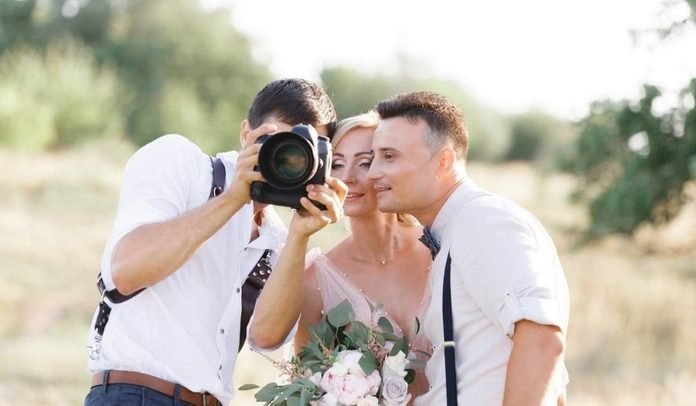
A proposal photographer does not always need a dramatic hiding place. In fact, the person crouched behind a tiny shrub is often more noticeable than the person sitting normally on a bench with a camera bag. The goal is to belong in the setting, keep a clear view, and avoid drawing your partner’s attention before the question.
The right position depends on the approach path, available light, crowd movement, lens choice, and what normally happens at the location. A photographer who looks like a tourist at an overlook may disappear in plain sight. The same camera at an empty neighborhood park may feel unusually obvious.
Use this guide to choose a position with your photographer, not to dictate a hiding spot from a map.
A professional should scout the exact place, test the view, and help you build a second option when the first position becomes crowded or unsafe.
The Best Cover Is Normal Behavior
People usually notice behavior before they notice equipment. Someone calmly photographing architecture, reading on a bench, or waiting near a café looks ordinary.
Someone facing the wrong direction, checking one couple repeatedly, or suddenly ducking behind a column looks connected to the plan.
The photographer should have a believable reason to be where they are. That does not require a costume or complicated acting. It may mean holding the camera openly like a visitor, keeping a laptop on a café table, or walking the same public path as everyone else.
The position should let the photographer remain relaxed for the entire arrival window, not only for the ten seconds when you kneel.
Scout the Approach, Not Just the Proposal Spot
A beautiful camera angle is useless if your partner sees the photographer while walking toward it. Start with the route: where you will enter, which direction you will face, where your partner naturally looks, and whether you pass the hiding place.
Walk the route at the same weekday and time when possible.
Notice maintenance vehicles, tour groups, bright windows, live music, security staff, and temporary barriers.
Send the photographer a short video from your eye level. Then agree on an approach that does not require you to steer your partner by the shoulders or keep checking whether the photographer is ready.
| Setting | Position that can look natural | Main risk to solve |
|---|---|---|
| Scenic overlook | A visitor photographing the view from farther down the railing | Your partner may face away from the camera or stop at a different opening |
| City street | A café seat, building entrance, newsstand area, or legal public corner | Pedestrians, deliveries, and parked vehicles can block the frame |
| Park or garden | A bench, mapped path bend, pavilion edge, or planted border with permission | The photographer can look unusually obvious during quiet hours |
| Beach | A boardwalk, dune overlook, lifeguard-area boundary, or seated blanket setup | There is little solid cover and wind carries voices |
| Restaurant | A reserved table, bar seat, host-approved doorway, or private-room edge | Low light and staff movement may reveal or obstruct the photographer |
| Hotel | A lobby seating area, terrace table, or balcony in an approved room | Security may question equipment or restrict professional photography |
A Bench Works Only When It Faces the Right Way
A bench is useful because sitting is normal and the photographer can wait without pacing. It is not automatically discreet. If every bench faces the lake and one person sits sideways aiming a long lens at the path, the cover falls apart.
Choose a bench that gives a three-quarter view of both faces when you stop.
The photographer can hold a book, coffee, or phone while waiting, with the camera accessible rather than lifted continuously. Confirm that the bench is not commonly occupied and select a nearby standing position in case someone else arrives first.
Never ask a stranger to surrender public seating for an unpermitted plan.
At a Landmark, Looking Like a Tourist Can Be Perfect
Busy viewpoints, public squares, murals, and monuments naturally attract cameras. The photographer may be safest in plain sight, taking a few genuine establishing photographs before you arrive. Your partner sees a visitor, not a person waiting specifically for them.
This works best when the photographer has several ordinary subjects to aim toward and does not make eye contact with you. It works poorly at a location where professional cameras are rare or restricted.
Keep the setup honest: no fake staff badge, impersonation, or claim of official access. Blending in should mean behaving like a normal guest, not misrepresenting authority.
A Café Table Can Hide the Waiting, Not a Bad Angle
A window table, patio corner, or seat near a plaza can make a photographer look like someone working or waiting for a friend. It also provides a stable place for a bag and a comfortable arrival buffer. Ask the business first if the photographer will use its space.
Glass reflections, patio umbrellas, planters, servers, and seated customers can break the shot.
The photographer should test the actual focal length through the intended opening. Buying one coffee does not grant the right to rearrange furniture, block a walkway, or occupy a high-demand table for an hour, so include the venue in the plan rather than hoping nobody notices.
Doorways and Columns Need a Clear Exit
Architectural cover can be excellent in city settings: a wide column, recessed doorway, arcade, or corner provides a clean line without putting the photographer in the open. The danger is choosing space that belongs to a residence, business entrance, fire exit, loading zone, or security route.
Use only legal, permitted access. The photographer should be able to step out smoothly after the answer instead of appearing to emerge from a locked area.
Also check how the light changes across the column. A couple standing in sun while the camera sits in deep shade can be manageable; a couple moving through alternating shadow every second is much harder.
Trees and Planting Beds Are Better as Edges Than Forts
A large tree trunk near a public path can break the photographer’s outline while still allowing an open stance. Low bushes rarely provide enough cover for an adult and often encourage awkward crouching, rustling, or damage to landscaping.
Keep the photographer on the path or approved ground. Do not enter flower beds, protected dunes, restoration areas, or private gardens for an angle.
A slightly more visible photographer who behaves normally is less suspicious—and far more respectful—than someone hiding where visitors are not meant to stand.
Open Beaches Require Distance and Timing
Beaches are difficult because there may be nowhere solid to hide.
A photographer can sit with a blanket or bag, walk like another visitor, work from a boardwalk, or position near a legal overlook with a longer lens. The couple must stop in the agreed place and face the agreed direction because the photographer cannot quietly cross open sand to correct the angle.
Check tide, wind, sun direction, beach access, and lifeguard or event restrictions.
Choose a backup point above the tide line. If the beach is nearly empty, a lone person repeatedly aiming a camera becomes more noticeable, so sunrise privacy may create a harder hiding problem than a moderately active hour.
In a Restaurant, Coordinate With One Staff Contact
Restaurants offer natural cover but little control. A photographer may wait at the bar, sit at a nearby table, or enter only after a server gives a cue. The manager should approve the arrangement, the table, any flash restriction, and whether other guests could appear in the images.
Give one employee the plan instead of explaining it to every server. Confirm where you will sit and whether your partner’s face will be visible.
Avoid asking staff to deliver the ring in food or a drink. The photographer’s job is easier if the proposal happens in a quieter side area before or after dinner, followed by a few portraits outside.
Rooftops and Terraces Need Permission More Than Camouflage
On a small rooftop, everyone can see everyone. The solution may be an officially arranged photographer pretending to photograph the skyline, a reserved corner with a screen, or having the photographer step out from indoors on a signal.
Do not assume a hotel or apartment rooftop is public. Confirm guest access, professional photography, tripods, lighting, and weather closures. Wind can move décor, make speech hard to hear, and limit how far away the photographer can stand.
A permitted visible professional is better than a hidden stranger who is removed by security just before the question.
Museums and Gardens Often Have Rules That Change the Plan
A conservatory aisle, museum courtyard, library, or formal garden can supply natural layers and beautiful light. It can also restrict commercial photography, interchangeable-lens cameras, tripods, flash, props, or blocking.
Public admission is not always permission for a professional session.
Ask the venue exactly what is allowed and whether a permit or timed reservation is required. The photographer may blend in as another visitor only if that is permitted. Keep the proposal route short and avoid holding up others.
If the venue requires the photographer to be identified, protect the surprise through positioning rather than trying to bypass the rule.
Sometimes the Photographer Should Be Completely Visible
If your partner is used to seeing tourists, creators, or portrait sessions at the location, a camera in plain view may be the least suspicious option. The photographer can point away, photograph the environment, or look like they are waiting for another client.
Another approach is a planned couple photo session that turns into a proposal. It gives both people a natural reason to dress well and interact with a photographer, but the person being proposed to may guess what is coming. Use it only if preserving every last second of surprise matters less than comfort, good photographs, and a calm setup.
Map the Exact Frame and Mark a Forgiving Zone
Do not send only a venue address. Share a dropped pin, approach arrows, a current photograph of the stopping point, and the direction each person will face. Choose a zone several feet wide so the plan does not fail when you stop slightly early.
The photographer should explain what happens if you miss it. Perhaps you continue to a railing, pause near a lamp, or turn for a view. Practice the route once without your partner if possible.
The goal is not a choreographed kneel; it is removing the need for suspicious glances and last-second text messages.
Use a Time Window and One Neutral Signal
Arrival rarely happens at one exact minute. Give the photographer a realistic window and pay for enough coverage to absorb ordinary delays. Decide what happens if you are more than fifteen or thirty minutes late so nobody improvises under stress.
Use one signal that belongs in the date: removing a coat, setting down a tote, asking for a photo, or stopping at the chosen view. Avoid waving, looking directly at the camera, or texting from ten feet away.
A helper can update the photographer, but only if that person can do it quietly without sending suspicious messages to a shared group.
Plan for the Stranger Who Takes the Perfect Spot
A bench can be occupied. A delivery van can block the street. A family may begin taking portraits exactly where you planned to stand. Decide beforehand whether you will wait naturally, walk one loop, or use the second marked point.
Do not hover or pressure people to move. A proposal should not depend on claiming public space. The photographer can signal a change only through the agreed method.
Often the best choice is moving twenty feet and preserving the mood instead of sacrificing the surprise for a background.
Know Which Hiding Places Are Not Worth It
Trash enclosures, private balconies, active construction, road shoulders, unmarked trails, locked areas, restrooms, staff-only rooms, and other people’s property are not clever hiding places. Neither are positions that require the photographer to lie flat, climb, trespass, or point a camera through someone’s home.
Safety, dignity, and permission come first. The photographer also needs a stable stance, a clear line, and enough room to protect equipment. If a location offers no lawful and respectful position, change the location or let the photographer be visible.
Agree on How the Photographer Will Reveal Themselves
After the yes, give the couple a private minute before anyone rushes in. The photographer can keep shooting from a respectful distance, then approach on a wave or after an agreed amount of time. The proposer should introduce them clearly so the newly engaged partner understands why a stranger has been nearby.
Ask whether your partner wants portraits before directing anything. Tears, a phone call, a quiet sit, or simply leaving may feel more important. If the answer is complicated, the photographer should know the signal to stop and depart without hovering.
A Quick Position Brief for the Photographer
Your final brief should contain current photos of both partners, clothing details, arrival route, time window, primary and backup positions, face direction, proposal cue, crowd plan, weather decision time, and the name of the one person allowed to send updates.
Keep it visual and short enough to use on a phone. If the plan requires three pages of spoken directions during the final approach, simplify it. Good hiding is mostly the result of precise preparation followed by very ordinary behavior.
Choose the Position From the Photograph You Cannot Recreate
The essential frame is not always the kneel. It may be the partner’s face as they understand what is happening, both faces during the question, or the first embrace.
Tell the photographer which reaction matters most, because one fixed hidden position may not capture every angle equally.
A position facing the person being proposed to usually protects their reaction; a side angle can show both people and the setting; a distant front angle may give symmetry but hide the ring hand.
Let the photographer make that tradeoff deliberately. Portraits, ring details, and wide location images can be created afterward. The actual answer cannot.
Test Whether the Hiding Place Works With the Lens
“Far away” is not a complete plan. A long lens can isolate the couple and help the photographer remain less noticeable, but people, columns, plants, and signs between the camera and the couple become larger obstacles. Heat, haze, low light, and camera shake can also affect distance.
The photographer should take test frames from the intended spot at the intended hour. Ask to see what the proposal zone actually looks like through the camera. This prevents a plan where the photographer is technically hidden but both faces are tiny, backlit, or covered by the first pedestrian who passes.
Give the Photographer a Position Hierarchy
| Priority | Position | When to use it | What the proposer does |
|---|---|---|---|
| A | Primary tested position | Normal crowd, planned access, workable light | Follow the main route and stop in the marked zone |
| B | Nearby alternate angle | A stranger occupies the first spot or a small obstruction appears | Continue to the second natural stopping point |
| C | Visible tourist position | There is no safe cover or the location is unusually empty | Ignore the photographer and focus on the date |
| D | Portraits only after the question | Security, weather, access, or safety makes hidden coverage unreliable | Propose privately and meet the photographer afterward |
The hierarchy removes the temptation to rescue the perfect angle in front of your partner. Everyone knows what can change and what should simply be abandoned.
Build the Photographer’s Waiting Routine
The photographer may be in position twenty to forty minutes. Decide what they will do during that time so they do not repeatedly lift the camera toward every similar-looking couple. On a bench, they might read and periodically photograph the landscape.
At a café, they might work at a laptop. At a landmark, they can take genuine environment frames.
They should arrive early enough to settle, but not so early that venue staff or regular visitors begin asking why they are waiting. Equipment should be ready without a loud bag-opening sequence at the exact arrival time.
Use Current Recognition Details
Send a photograph from the last few weeks, not a two-year-old vacation portrait. Include likely coats, hats, bags, hair changes, and approximate heights. In a crowded location, explain one natural detail that is unlikely to change, such as a tan shoulder bag or navy coat.
The photographer should identify both people before the proposal zone, then avoid staring. A helper may send one update—“They left the restaurant; both wearing dark coats”—but the plan should not depend on a stream of messages.
Questions That Reveal Whether a Hiding Plan Is Real
- Can you show me a test frame or a complete proposal gallery from a similar distance?
- What will you look like while waiting, and why will that look normal there?
- Will we pass you during our approach?
- What object, person, or vehicle is most likely to block the image?
- Where do I go if the primary spot is occupied?
- What happens if security asks you to move?
- What weather makes this position unsafe or unusable?
- How will you know the proposal is beginning without a text?
- How long will you remain hidden after the answer?
- What is the plan if you cannot safely photograph the question?
Specific answers are reassuring. “I will hide somewhere nearby” leaves the most important part unresolved.
Run a No-Phone Final Approach
Thirty minutes before the meeting window, all necessary updates should go through one helper. The proposer checks the ring and route once, silences unnecessary notifications, and stops communicating with the photographer unless the plan truly changes.
This matters because checking a phone at every corner is more suspicious than any camera. It also divides attention. The hidden plan is successful only when it allows the proposer to become present before the question.
Final Thoughts
The least suspicious proposal photographer is not necessarily the one you cannot see. It is the one who makes sense in the environment and never asks you to behave strangely.
Choose a legal position, test the approach, leave room for crowds and delays, and agree on a quiet reveal after the question.
Most of all, keep the photograph in its proper place. It is there to preserve the moment, not to make the moment serve the camera.